What Is a Vascular Malformation? Your Complete Guide to Care
Finding out you or a loved one has a vascular malformation can cause anxiety.You probably want to know what it means for your health. We are here to provide clear, calming answers.
A vascular malformation is simply an abnormal cluster of blood vessels. These develop before birth. While they can look or feel concerning, you have highly effective ways to manage them safely.
The first step to feeling well is to understand what is wrong with you. In this guide, we explain what these malformations are, how they affect your body, and the safe, minimally invasive treatments available to you.
What Is a Vascular Malformation?
You might wonder what is vascular malformation in simple terms. It is an area where your blood vessels did not form correctly during pregnancy. Instead of normal tubes carrying blood, the vessels tangle or widen.
People often confuse them with hemangiomas. They are different. A hemangioma is a benign tumor that grows quickly after birth and often fades over time. A vascular malformation is present at birth and grows slowly as you grow.It’s not going away on its own.
Types of Vascular Malformations
Your care depends on the exact vessels involved. Doctors categorize the types of vascular malformations based on blood flow and vessel structure.
Arteriovenous Malformations (AVMs)
An arteriovenous malformation (AVM) connects arteries directly to veins. It bypasses the normal capillary system entirely. This causes fast, high-pressure blood flow that requires careful medical management.
Venous Malformations
A venous malformation involves enlarged, stretched veins. These cause slow blood flow. They often look like soft, blue lumps under your skin and can cause localized swelling.
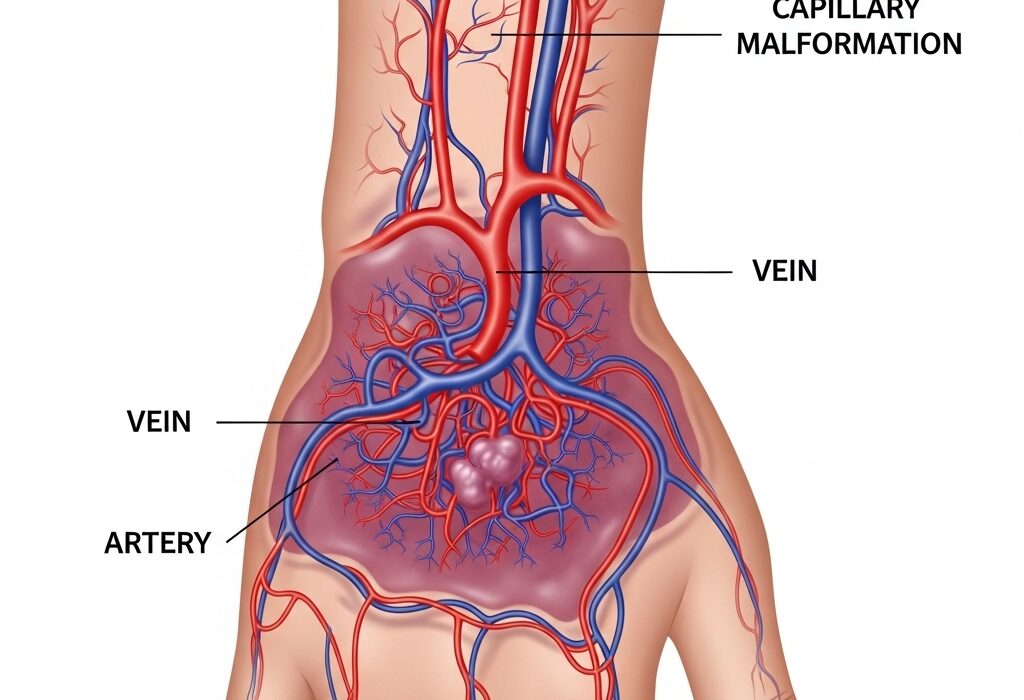
Capillary Malformations
A capillary malformation affects the tiny blood vessels near the skin surface. You might know these as port-wine stains. They appear as flat, pink or red marks on the skin.
Lymphatic Malformations
These involve the lymphatic system, which carries fluid through your body. They form sponge-like cysts filled with clear fluid, often in the neck or armpits.
Combined Malformations
Sometimes, a person has a mix of different types. A common example is a venolymphatic malformation, which impacts both veins and lymphatic vessels.
Causes of Vascular Malformations
These conditions are congenital. That means they are there when you are born. They happen because of localized genetic mutations that occur during early fetal development.
They are not your fault. Nothing you or your parents did during pregnancy caused them. They are not tied to lifestyle factors, diet, or environmental exposures.
Symptoms of Vascular Malformations
Your vascular malformation symptoms depend entirely on the type and location of the abnormal vessels. Many remain unnoticed for years before causing discomfort.
Common physical signs include visible skin discoloration, persistent swelling, or a feeling of heaviness in your limbs. You might also notice that the skin over the area feels unusually warm to the touch. Sometimes, these fragile vessels can bleed.
If the malformation is located internally, it can affect how your organs work. For example, symptoms of vascular malformation in brain tissue can include headaches, seizures, or vision changes.
Risk Factors and Complications
Vascular malformations grow as you grow. Hormonal changes during puberty or pregnancy can cause them to expand faster.
If left unmonitored, complications can arise. High-flow malformations carry a risk of rupture and internal bleeding. Internal lesions can put pressure on surrounding organs, causing long-term damage. Visible malformations on your face or limbs can also impact your self-esteem and mental well-being.
Diagnosis
Getting a precise diagnosis takes the guesswork out of your care. Your doctor will start by going over your medical history and doing a full physical exam.
To see exactly what is happening beneath your skin, specialists use advanced imaging tests:
- Ultrasound: Uses sound waves to check blood flow and vessel structure.
- MRI: Provides detailed pictures of soft tissues and surrounding organs.
- CT Scan: Helps doctors see if the malformation involves your bones.
- Angiography: Maps out your exact blood vessels using a special dye and X-rays.
Treatment Options
Finding the right vascular malformation treatment means prioritizing your safety and comfort. You have multiple options for relief.
Non-Surgical Management
Observation is often the first step for mild cases. If the malformation causes swelling or aching, compression therapy using special garments can provide immediate daily relief.
Minimally Invasive Treatments
Say goodbye to discomfort with targeted, minimally invasive procedures. Most people can get back to their normal routines the same day.
- Sclerotherapy: A specialist injects a medicine into the vein to shrink the abnormal vessels.
- Embolization: This is a highly effective treatment for vascular malformation AVM. A doctor places a special material inside the vessel to block abnormal blood flow safely.
- Laser therapy: This safely lightens capillary malformations on the skin surface.
Surgical Treatment
Sometimes, your doctor will recommend surgical removal. This is necessary when the malformation is easily accessible or poses a severe risk to nearby vital organs.
Vascular Malformations by Location
The impact of your condition changes based on where it lives in your body.
Brain (AVMs)
These require careful monitoring to prevent bleeding that could affect your nervous system.
Skin and Soft Tissue
These are the most visible. Treatments focus on reducing their size and improving your appearance.
Limbs
Malformations in your arms or legs can cause pain and swelling. Compression and sclerotherapy offer significant relief.
Internal Organs
These involve your liver, lungs, or bowels. Specialized imaging ensures your vital organs remain safe and functional.
Living with a Vascular Malformation
Living with this condition is entirely manageable. It requires a steady, long-term approach to your health.
Simple lifestyle adjustments, like wearing compression garments and protecting the area from injury, make a big difference. Regular monitoring with your specialist ensures that any changes are caught and treated early. Peace of mind comes from staying proactive.
When to See a Doctor
You should never ignore sudden changes in your body. Prompt medical attention keeps you safe.
Contact a specialist immediately if you notice rapid growth, sudden pain, or bleeding from the malformation. If you experience severe headaches, dizziness, or numbness, seek emergency care right away.
FAQs
What is a vascular malformation?
It is an abnormal cluster of blood vessels present at birth. These tangled vessels disrupt normal blood flow in the affected area.
Is vascular malformation dangerous?
Not always. While some high-flow types can cause internal bleeding, most are easily managed with proper medical supervision.
What is the difference between AVM and vascular malformation?
An AVM is simply one specific type of vascular malformation. It specifically involves a direct, high-pressure connection between arteries and veins.
Can vascular malformations be cured?
Yes. Minimally invasive treatments and surgery can safely remove or shrink the abnormal vessels for lasting relief.
Are vascular malformations cancerous?
Not at all. They are entirely benign structural defects that will never turn into cancer.
Your Path to Lasting Relief
You do not have to live with pain, swelling, or uncertainty. Vascular malformations are highly treatable conditions. Early diagnosis and proper care give you the best possible outcome.
When it comes to your health, vascular care is the best service provider. Our specialists combine deep expertise with patient-first treatments. People trust us. Results prove it.
Regain your comfort and confidence. Book your consultation today.