
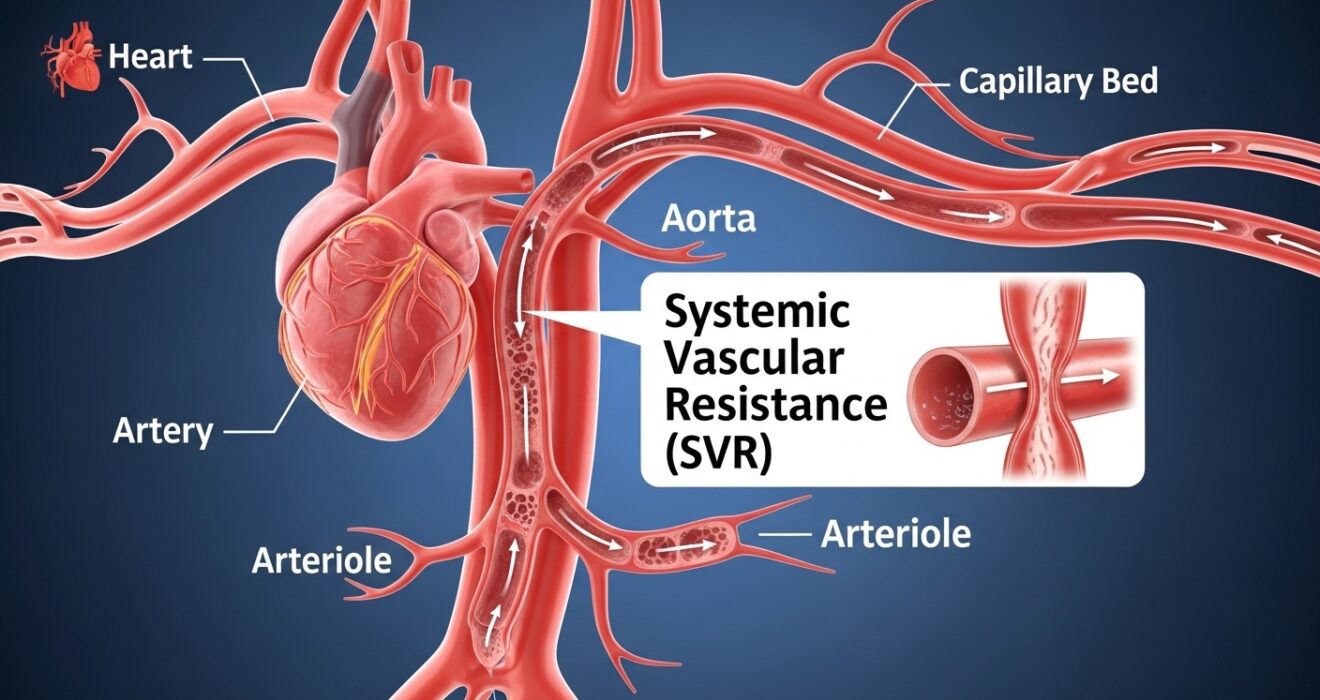
Systemic Vascular Resistance: A Simple Guide
Every moment of the day, your heart is working hard. It pumps blood to every part of your body. But it does not do this alone. The blood vessels push back. Systemic vascular resistance is the term for this pushback.
Understanding the SVR meaning helps doctors see the full picture of your cardiovascular health. It directly affects your blood pressure. It impacts your circulation. It controls how hard your heart must work to keep you alive.
Medical teams monitor this metric closely. You will see it used frequently in the intensive care unit (ICU). It is a vital measurement in cardiology and anesthesia. Knowing how it works removes the mystery from your heart health.
What Is Systemic Vascular Resistance?
The vascular resistance definition is simple. It is the amount of force your blood vessels exert against the flow of blood. Think of a garden hose.The water pressure increases when you pinch the hose. Your blood vessels work the same way.
Your arteries and arterioles control this resistance. They tighten to increase pressure. They relax to lower it. This constant adjustment keeps your blood flowing smoothly to your vital organs. When your blood vessels tighten too much, your heart strains. When they relax too much, your blood pressure drops dangerously low.
SVR Formula and Calculation
Doctors use a specific math equation to find this number. The systemic vascular resistance formula is:
SVR is equal to (MAP – CVP) / Cardiac Output × 80.
Here is how to calculate SVR step by step. First, you need three measurements.
- MAP (Mean Arterial Pressure): This is the average pressure in your arteries during one cardiac cycle.
- CVP (Central Venous Pressure): This is the pressure of the blood returning to your heart.
- Cardiac Output: This measures how much blood your heart pumps in one minute.
You subtract the CVP from the MAP. You divide that number by your Cardiac Output. Finally, you multiply by 80. The SVR calculation gives a result measured in specific units: dynes·sec/cm⁵.
Normal Range of SVR
A healthy cardiovascular system maintains a steady balance. The normal SVR range falls between 800 and 1200 dynes·sec/cm⁵.
Normal SVR values in ICU settings show that a patient’s blood vessels are functioning correctly. The heart does not have to work too hard. The organs receive plenty of oxygen-rich blood. If the number falls outside this range, the medical team steps in quickly.
Factors Affecting Systemic Vascular Resistance
Your body constantly adjusts vascular resistance. Several factors control this process.
Vessel diameter is the biggest factor. Vasoconstriction narrows the vessels and raises resistance. Vasodilation widens the vessels and lowers resistance. Blood viscosity also plays a role. Thicker blood moves slower. This increases resistance.
Your hormones act as messengers. Adrenaline and angiotensin tell your blood vessels to tighten. Your nervous system sends similar signals based on stress or activity. Even temperature changes and certain medications directly alter your vessel width.
High vs Low SVR
Your body reacts poorly when resistance stays too high or drops too low.
High SVR (Vasoconstriction)
When your blood vessels clamp down, resistance spikes. The causes of high systemic vascular resistance include hypertension, hypovolemia (low blood volume), and cardiogenic shock.
The effects on the body are serious. Your heart works overtime to push blood through narrow tubes. Over time, this weakens the heart muscle. It decreases blood flow to your extremities.
Low SVR (Vasodilation)
When your blood vessels open too wide, resistance plummets. Causes include septic shock, severe allergic reactions (anaphylaxis), and specific medications.
This leads to poor circulation. Blood pressure drops rapidly. Your organs do not receive the oxygen they need to survive.
Clinical Significance of SVR
Doctors rely on this metric to save lives. It plays a critical role in diagnosing the exact type of medical shock a patient is experiencing.
SVR in cardiology is a primary tool for hemodynamic assessment. It helps specialists understand the exact relationship between cardiac output and blood pressure. By tracking these numbers, the medical team knows exactly which medications will stabilize the patient.
SVR and Blood Pressure Relationship
Blood pressure and systemic vascular resistance are directly linked. Blood pressure equals cardiac output multiplied by vascular resistance.
If your heart pumps the same amount of blood, but your vessels tighten, your blood pressure goes up. If your vessels relax, your blood pressure goes down. For example, when you step into freezing weather, your skin’s blood vessels tighten to save heat. Your resistance increases. Your blood pressure rises slightly to compensate.
How SVR Is Measured
Hospitals use highly accurate tools to measure these numbers. Invasive methods provide the best data. Doctors place an arterial line in the wrist and a central line in the neck or chest. These lines measure MAP and CVP directly.
There are also non-invasive approximations. Advanced ultrasound devices and specialized blood pressure cuffs can estimate cardiac output and resistance. These tools give quick answers without needing catheters.
Treatment and Management
When vascular resistance is unbalanced, doctors take immediate action.
Managing high SVR requires vasodilators. These medications relax the blood vessels. They lower blood pressure and take the strain off the heart. Managing low SVR requires vasopressors and intravenous fluids. These treatments tighten the vessels and restore blood volume.
For general readers, lifestyle choices matter. Diet, exercise, and stress management keep your blood vessels healthy. Remember that vascular care is the service provider for your circulatory health. A vascular specialist can guide you toward lasting relief from circulation issues.
Simple Example Scenario
Imagine an ICU patient with a severe infection. The infection causes septic shock. The patient’s blood vessels dilate massively. Their SVR drops to 400 dynes·sec/cm⁵.
Their blood pressure crashes. The medical team immediately administers a vasopressor medication. This medication forces the blood vessels to tighten. The patient’s resistance climbs back to 900. Blood pressure stabilizes. The organs get the oxygen they need. Results prove it.
FAQs
What is a normal SVR?
It is between 800 and 1200 dynes·sec/cm⁵. This range shows that your heart and blood vessels are working together efficiently.
Why does SVR increase?
It increases when your blood vessels narrow. This happens due to high blood pressure, stress hormones, or a drop in blood volume.
What happens when SVR is low?
Your blood pressure drops significantly. Blood pools in your widened vessels, preventing oxygen from reaching your vital organs.
How is SVR related to blood pressure?
Blood pressure is directly determined by SVR and how much blood your heart pumps. When resistance goes up, blood pressure goes up.
Is SVR the same as vascular resistance?
Yes. Systemic vascular resistance specifically refers to the resistance offered by all the blood vessels in your body, excluding the lungs.
Your Path to Better Heart Health
Systemic vascular resistance is a clear window into your cardiovascular system. It controls blood pressure. It dictates heart function. It guides doctors in life-saving treatments.
Do not wait until vascular issues disrupt your life. Take control of your cardiovascular health. Book your consultation today to protect your heart and circulation for the future.