Why Your Varicose Veins Keep Coming Back After Treatment
You had it treated. You followed every instruction, wore the stockings, and avoided standing for weeks. And now, a year or two later, there’s a vein back in almost the same spot. Did the treatment even work?
Introduction
This is one of the most common questions vascular surgeons get from patients who’ve already been through a procedure. It feels like the treatment failed, but recurrence after varicose vein surgery is far more common and far more explainable than most patients are told beforehand. The real reason for varicose veins returning usually falls into one of a few specific categories, and knowing which one applies to you changes what happens next.
It’s Often a New Vein, Not the Old One Returning
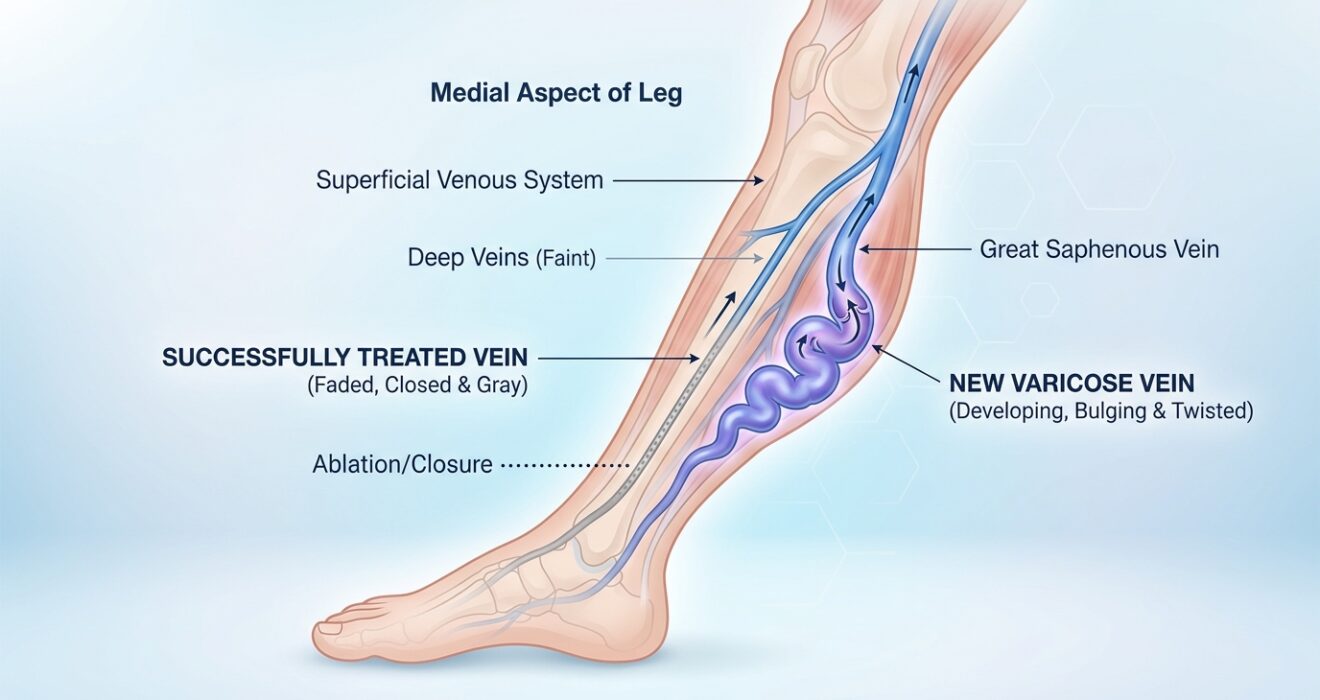
This surprises most patients. When a vein is properly closed through laser ablation or surgery, that specific vein does not reopen. What often happens instead is that a different, nearby vein becomes varicose over time. Since genetics and valve weakness affect your entire venous system, not just the one vein that got treated, other veins in the same leg remain just as prone to failing as the original one was.
So the vein you’re seeing now may technically be a new problem, even though it looks like the old one came back.
Sometimes It’s the Same Vein, Reopening
This does happen, though less often with modern techniques than with older ones, and it’s sometimes called laser ablation recurrence when it involves a treated vein reopening. A systematic review comparing laser ablation to traditional stripping found technical failure, meaning the vein reopening or never fully closing, occurs somewhat more often with laser methods than with surgical stripping, though overall recurrence rates at one, two, and five years were similar between the two approaches. In some cases, incomplete closure during the original procedure leaves a small channel that gradually reopens.
This is more likely if the original vein was unusually large, twisted, or if there were multiple feeding veins involved that weren’t all addressed in the first procedure. A case series on treating recurrent veins after the sapheno-femoral junction found that recurrence at this specific junction can often be re-treated successfully with a second laser procedure once properly mapped on ultrasound.
Untreated Smaller Veins Were Always Part of the Picture
Sometimes what looks like recurrence is really just the natural next stage of a condition that was only partially treated the first time. If your original procedure addressed one major vein but smaller connected veins were left alone because they weren’t causing symptoms yet, those smaller veins can become more prominent over the following years as they take on more of the pressure the treated vein used to carry. Smoking is worth mentioning here too. It’s not the most common cause of varicose veins on its own, but it does affect circulation and vein wall health, which can make any remaining weak veins progress faster after treatment.
Lifestyle and Hormonal Factors Didn’t Go Away
Treatment closes a faulty vein. It doesn’t change your genetics, your hormones, or your job. Research on genetic factors in varicose veins has found that risk passed down from parents affects vein wall and valve strength throughout your entire leg, not just the vein that got treated. If you’re back on your feet all day at work, if you’ve had another pregnancy, or if weight has crept up since your procedure, all of the same pressures that caused the original vein problem are still acting on your legs. Treatment removes the immediate issue, but it doesn’t remove your underlying risk.
How to Tell Which One Applies to You
The only reliable way to know is a fresh duplex ultrasound on the treated leg. It shows your surgeon whether the originally treated vein is still closed, whether a different vein has become the problem, or whether smaller veins nearby have progressed. Guessing from how it looks on the surface tends to be unreliable, since a new vein and a reopened one can look almost identical to the eye.
What This Means for Your Next Step
If it’s a new vein, it usually gets treated the same way the first one did, and there’s no reason to assume your original treatment failed. If it’s the original vein reopening, your surgeon may recommend a different technique for the treatment of recurrent varicose veins the second time around, based on what didn’t fully close. If you’re wondering how to prevent recurrence of varicose veins going forward, staying active, managing weight, and wearing compression during high-risk periods like pregnancy all genuinely help, even though none of them can override a strong genetic tendency completely. Either way, recurrence isn’t a sign you did something wrong, and it isn’t a sign the first treatment was pointless. It’s simply a sign that vein disease progression, driven by the same genetics and hormones present before your first treatment, is still active in your leg, which was always going to be true no matter which vein got treated first.
At Vascular Care Lahore, we scan the treated leg properly before deciding what’s actually going on, rather than assuming it’s a repeat of the same problem.
Noticed a vein coming back after treatment and want the real reason for varicose veins returning in your case? Get a proper reassessment with Dr. Usman Jamil Mughal at Horizon Hospital, Johar Town, Lahore.
📞 Call/WhatsApp: 0317-4123373