Compression Stockings for Varicose Veins: What Actually Works (and What’s Just Marketing)
You bought a pair because your feet ached after a long day at the shop or because your bhabhi swore by them after her second pregnancy. Now they’re sitting in a drawer, half used, because you’re not sure if you’re wearing them right or if they’re even doing anything.
Introduction
Compression stockings are the first thing most doctors recommend for varicose veins and also the thing most patients get wrong. Some people call them compression socks; others say stockings, but they’re the same idea: tight, graduated hosiery meant to support blood flow and manage chronic venous insufficiency. Pharmacies in Lahore stock two or three brands, each with a different pressure number printed on the box, and no one at the counter explains what it means. So people buy whatever’s available, wear it for a week, don’t feel a difference, and give up on it.
That’s usually not because stockings don’t work. It’s because the pressure, the length, or the timing wasn’t right for what their veins actually needed.
How Compression Stockings Actually Help
Every time you walk, your calf muscles squeeze and push blood back up toward your heart. Stand still for hours behind a counter, in an OT, or on your feet at a factory, and that pump basically switches off. Blood starts pooling lower in the leg.
A compression stocking does that pumping job from the outside. It’s tightest around the ankle and loosens gradually as it moves up the leg. This is called graduated compression, and it’s what pushes pooled blood back upward and takes some of the load off valves that are already struggling.
What it won’t do is fix the valve itself. Think of a stocking as pain relief for a headache. It eases the heaviness, the swelling, and the ache while the underlying valve problem stays exactly the same underneath. Most patients are never told this part clearly, which is why so many end up disappointed.
Picking the Right Pressure (mmHg)
Compression strength is measured in millimeters of mercury, or mmHg. Here’s roughly where most stockings fall:
- 8 to 15 mmHg, light. For tired, achy legs with no real varicose veins showing yet. More of a comfort product than treatment.
- 15 to 20 mmHg, mild to moderate. Works well for early varicose veins, pregnancy swelling, or a long flight.
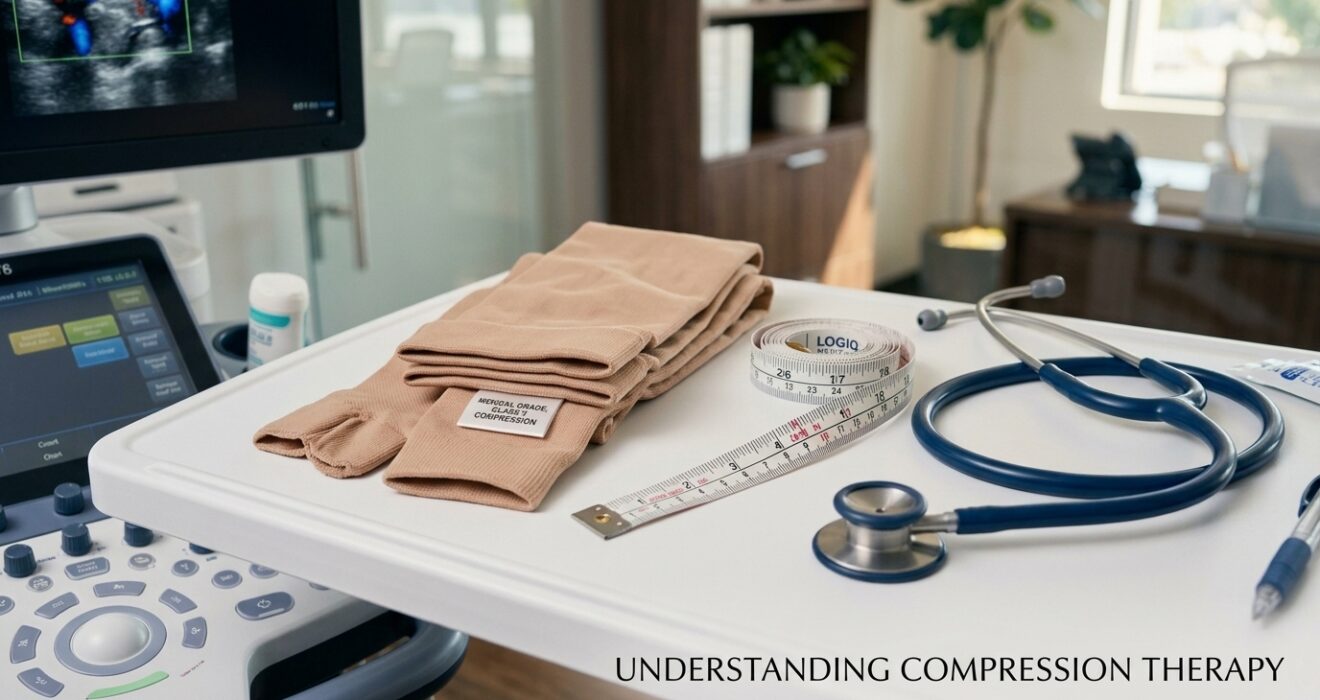
- 20 to 30 mmHg, medical grade. This is what most vascular surgeons actually prescribe once varicose vein symptoms are confirmed on ultrasound. A Cochrane review of compression trials found this range to be the one most commonly used in clinical practice for diagnosed venous disease.
- 30 to 40 mmHg and above. Only for advanced cases or after certain procedures, usually fitted by a specialist rather than bought at a pharmacy.
If you’ve never had a proper ultrasound and you’re just guessing your pressure level from what the shopkeeper hands you, there’s a good chance you’re either undertreating your legs or wearing something tighter than you need.
Knee-High vs Thigh-High: Getting the Fit and Length Right
Most people do fine with knee-high stockings, even when the vein runs higher up. Thigh-high versions are usually only needed for veins above the knee or after specific in-clinic treatments, and your surgeon will tell you if that applies to you.
Sizing matters more than the brand name on the box. A stocking that’s too small at the calf rolls down and digs in, which cuts circulation instead of helping it. That’s the opposite of the point. Measure your ankle and calf before buying instead of guessing by shoe size.
Prices vary a fair bit between pharmacy brands and medical-grade options, and a higher price doesn’t always mean better compression. What actually matters is the mmHg rating and correct size, not the brand name printed on the packaging.
Wearing Them the Right Way
Put them on first thing in the morning, before you’ve been on your feet. Your legs are at their least swollen then, so the stocking slides on easier and works the way it’s supposed to.
Never fold or roll the top edge down. A rolled cuff turns into a tight band that can restrict blood flow, which is exactly the problem you’re trying to avoid.
Take them off at night. These are meant for daytime use, not around the clock. If you’re wondering how long to wear compression stockings each day, most surgeons suggest putting them on in the morning and keeping them on until bedtime, not just for an hour here and there.
Replace them every three to four months. The elastic loses its grip well before the fabric looks worn out, especially with Lahore’s heat and regular washing.
If they leave deep marks, feel numb, or genuinely hurt, that’s not a sign they’re “working harder.” It means the fit or strength is wrong, and you should get it checked.
Where Stockings Fall Short
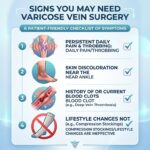
Here’s the part most product listings skip. Compression stockings slow the symptoms down. They don’t reverse the disease. If your veins are already bulging or the skin around them is changing color, stockings will keep you more comfortable day to day, but the faulty vein underneath usually keeps getting slightly worse over time.
For a lot of patients, especially those with mild symptoms or recovering from a procedure, stockings really are the right long-term answer. For others, they’ve quietly become a way to avoid a five-minute diagnostic scan that would show whether it’s time for laser treatment instead of surgery. According to the Mayo Clinic, compression is a solid first step for self-care, not a replacement for evaluation once symptoms start progressing.
At Vascular Care Lahore, we start with a proper duplex ultrasound before recommending anything, including whether compression alone is enough for you or whether it’s time to look at treating the valve directly.
Not sure which compression level you actually need?
Get a proper vein assessment with Dr. Usman Jamil Mughal at Horizon Hospital, Johar Town, Lahore.
📞 Call/WhatsApp: 0317-4123373