Exercise for Varicose Veins
Exercise for Varicose Veins: What Actually Helps (And What Makes It Worse)
You noticed the veins a few months ago. Now every time you think about going back to the gym, there’s this constant worry in the back of your head: what if working out makes it worse?
It’s a fair question, and honestly, one that doesn’t get a straight answer often enough. Most people just get told “stay active” without anyone explaining what that actually means in practice. If you’re still not sure what’s actually driving your veins in the first place, our guide on what causes varicose veins is a good place to start.
So let’s actually answer the exercise question.
Does Exercise Help or Hurt Varicose Veins?
Short answer: the right kind of exercise genuinely helps. The wrong kind can make symptoms feel worse, though it won’t cause new varicose veins from a single workout.
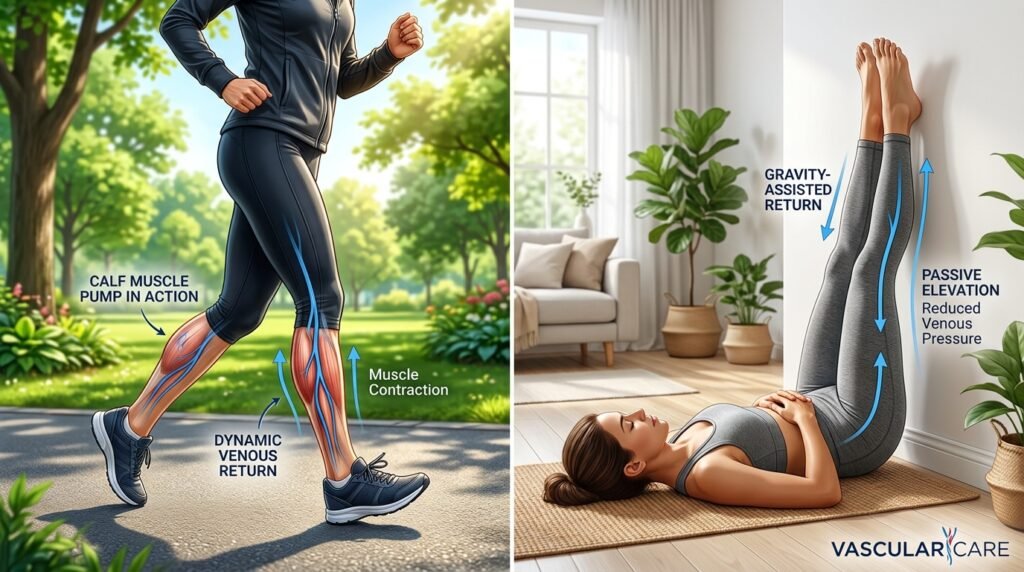
Here’s how it actually works , in plain terms. Your leg muscles act like a pump, squeezing the veins every time you move and pushing blood back up toward your heart. When you’re inactive, that pump barely works, and blood pools in the lower legs instead. That pooling is exactly what makes varicose veins ache, swell, and feel heavy by the end of the day.
So movement isn’t the enemy. It’s actually one of the simplest tools you have.
Exercises That Are Genuinely Good for Varicose Veins
These are low-impact, pump-friendly movements that get your calf muscles working without putting excess strain on already-weakened veins.
Walking The single most recommended activity, and for good reason. It’s low-impact, works your calf muscles consistently, and doesn’t put sudden pressure on your legs. Even a brisk 20 to 30 minute walk daily makes a noticeable difference over time.
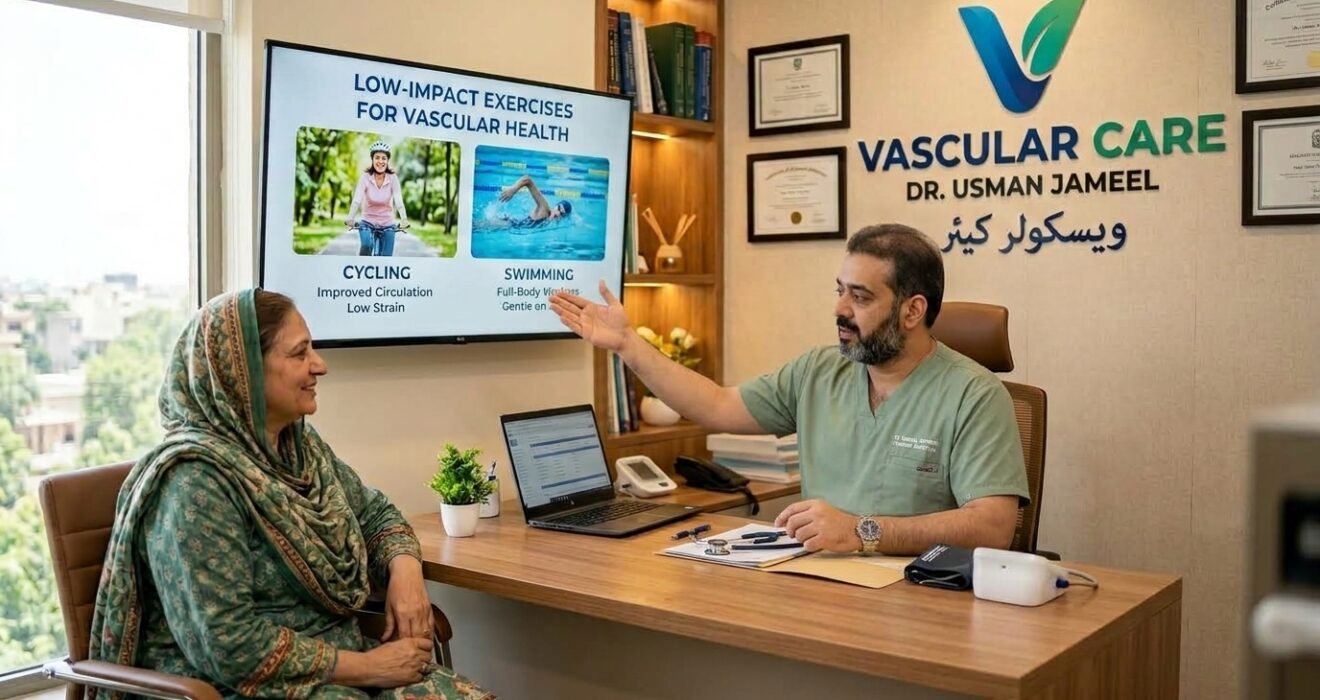
Swimming Water supports your body weight, which takes pressure off your legs while you’re still moving them. It’s one of the best options if standing exercises feel uncomfortable.
Cycling The pedaling motion is excellent for calf muscle activation, and since you’re seated, there’s less downward pressure on the veins compared to running. Stationary or outdoor, both work well.
Leg lifts and ankle rotations Simple enough to do at your desk. Flexing your ankles up and down or doing seated leg raises keeps blood moving even during a long workday.
Yoga poses that elevate the legs Poses like legs-up-the-wall are specifically good because gravity does part of the work, helping blood flow back toward the heart.
Exercises to Approach Carefully
None of these are strictly banned, but they need some adjustment if you already have visible varicose veins.
- Heavy weightlifting, especially squats and deadlifts, increases abdominal and leg pressure significantly, which can worsen the pooling effect. If you lift, consider lighter weights with more reps instead of maxing out.
- Running on hard surfaces puts repeated impact stress on the legs. If you enjoy running, softer surfaces like a track or treadmill with proper cushioning are a better choice than concrete.
- High-intensity interval training (HIIT) with a lot of jumping can be tough on the legs if your veins are already symptomatic. Lower-impact interval alternatives work just as well for cardio benefits.
What About Just Standing at the Gym?
This one surprises people. Standing still, like waiting between sets or standing through a long class, is actually harder on your veins than the exercise itself. If your leg muscles aren’t actively pumping, blood pools exactly like it does when you’re standing at a counter all day.
The fix is simple: keep moving between sets, even if it’s just gentle marching in place.
A Quick Note on Compression During Exercise
Wearing compression stockings while working out can genuinely help, especially for longer sessions like a gym class or a long walk. They support the vein walls and reduce that heavy, tired feeling afterward. If you’re not sure which type or pressure level suits your case, our detailed guide on compression stockings for varicose veins covers exactly what to look for and what’s just marketing.
Signs You Should Pause and See a Doctor Before Continuing
Exercise is generally safe, but a few signs mean it’s time to get checked before pushing further:
- Sudden, sharp pain in one specific spot on the leg
- A vein that feels hot or looks red and inflamed
- Noticeable swelling that doesn’t go down after rest
- Skin discoloration around a vein
These aren’t reasons to panic, but they are reasons to get an actual assessment rather than guessing. Our guide on varicose veins warning signs walks through exactly what’s worth worrying about and what usually isn’t.
Can Exercise Alone Fix Varicose Veins?
Here’s the part that disappoints people: no, exercise won’t make an existing varicose vein disappear. It helps manage the symptoms and slows things down, but it doesn’t fix a damaged vein valve.
The NHS recommends exercise mainly to help manage symptoms, not as a cure. Harvard Health Publishing agrees, and Cleveland Clinic adds that calf muscle movement is what actually keeps blood flowing upward in the first place.
If the vein itself needs addressing, that’s a conversation for an actual procedure, whether that’s a minimally invasive laser treatment or, in more advanced cases, surgery.
So, Should You Still Go to the Gym?
Yes. In fact, avoiding all activity out of fear of “making it worse” usually makes things worse instead; inactivity is one of the biggest reasons to varicose veins getting worse over time, not better. The goal isn’t to avoid the gym, it’s to exercise smart: focus on walking, cycling, and swimming, go easier on heavy lifting and high-impact runs, and keep moving even between sets.
If you’re dealing with visible veins and want to know whether your current symptoms need more than lifestyle changes, book a consultation and get a proper assessment instead of guessing based on what you read online.