Varicose Vein Surgery Recovery
Varicose Vein Surgery Recovery: What to Actually Expect in the First Week
The procedure is booked. Your surgeon has answered the “will it hurt” question and the “how long will it take” question. But now there’s a quieter worry sitting at the back of your mind: what happens after you go home?
How many days off work do you actually need? Can you sleep normally that first night? When are you allowed to just walk around your own house without worrying about it?
Nobody really explains this part in enough detail, so let’s go through it properly. And if you’re still deciding whether surgery is even the right call for you, our guide on signs you actually need varicose vein surgery is worth reading first.
How Long Are You Actually Off Work?
This depends heavily on which procedure you had and what your job involves.
Minimally invasive procedures like laser ablation (TEVLA) or radiofrequency ablation typically mean you’re back to a desk job within 2 to 3 days. Many patients even go back the next day if the job doesn’t involve much standing or physical strain.
Traditional surgical stripping usually needs a longer break, often 1 to 2 weeks, especially if your work involves standing for long periods, lifting, or a lot of walking.
If your job is physically demanding, like standing all day at a shop counter or doing manual labor, tell your surgeon about it upfront. This changes the recovery timeline they’ll recommend.
For a clearer picture of which procedure might suit your case in the first place, our comparison of laser treatment vs surgery breaks down exactly how the two approaches differ.
The First 24 Hours
Right after the procedure, you’ll likely be asked to walk around briefly before heading home. This isn’t just a formality, it actually helps prevent blood clots by keeping circulation moving.
Once you’re home, expect:
- Mild soreness or tightness around the treated area
- Some visible bruising along the vein’s path (this is normal and fades over a couple weeks)
- A bandage or compression wrap that needs to stay on as your surgeon tells you
Rest is fine, but total bed rest isn’t recommended. Short, gentle walks around the house every couple of hours actually help your recovery move faster.
How to Sleep After Varicose Vein Surgery
This is one of the most common questions patients ask, and that makes sense, since a bad night’s sleep on top of a procedure makes everything feel worse.
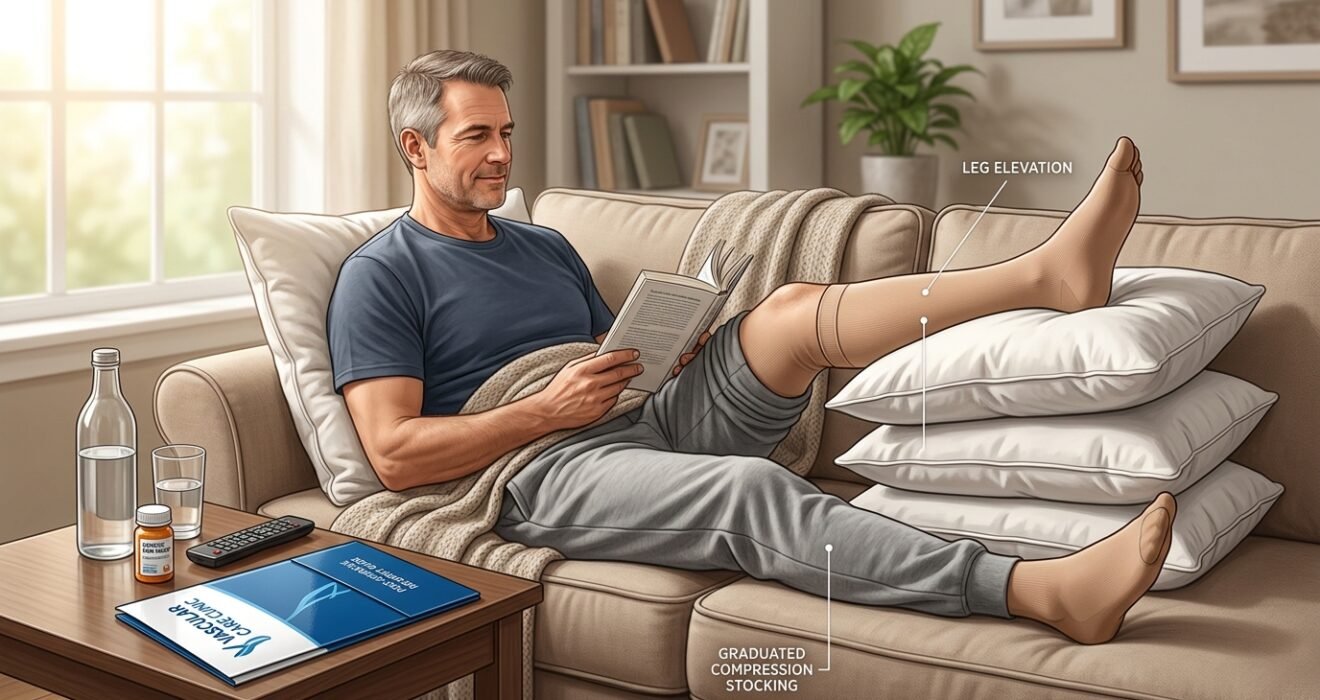
Elevate your leg. Prop the treated leg up on a pillow or cushion, slightly above heart level if comfortable. This reduces swelling overnight and helps with the aching feeling some patients report on night one.
Avoid sleeping directly on the treated leg for the first few nights, especially if there’s a bandage or dressing still in place.
Keep the compression stocking on unless your surgeon has specifically told you to remove it for sleep. Some patients are advised to wear it all day and night for the first few days.
Most patients find the first night is the most uncomfortable, and it noticeably improves by the second or third night.
When Can You Walk Normally Again?
Short walks are usually encouraged from day one, but “normal” walking, meaning your regular pace and distance without discomfort, typically returns within 3 to 7 days for minimally invasive procedures, and closer to 2 weeks for surgical stripping.
A good rule of thumb: if a movement causes sharp pain rather than mild tightness, that’s your body telling you to slow down and give it another day.
Compression Stockings After Surgery
You’ll likely be told to wear compression stockings for anywhere between a few days to a few weeks after the procedure, depending on your surgeon’s recommendation and how extensive the treatment was.
These aren’t just a formality. They reduce swelling, support the healing vein, and lower the risk of blood clots forming while you recover. If you’re unclear on how to actually wear them correctly or which compression level you need, our detailed guide on compression stockings for varicose veins covers the practical side of it.
What About Bruising and Pain?
Some bruising along the treated vein is completely normal and usually looks worse than it feels. It typically fades within 1 to 2 weeks. Mild pain or a pulling sensation is also common and usually manageable with the pain relief your surgeon prescribes.
What’s not normal:
- Pain that keeps getting worse instead of better
- A treated area that becomes hot, red, and increasingly swollen
- Fever
- A calf that suddenly feels tight, swollen, or painful in one specific spot (this could indicate a clot and needs immediate medical attention)
If you notice any of these, don’t wait it out. Contact your surgeon immediately rather than assuming it’ll settle on its own.
Driving After the Procedure
Most patients can drive again within 2 to 3 days after minimally invasive treatments, once they’re comfortable and off strong pain medication. After surgical stripping, it usually takes a bit longer. Always confirm with your surgeon first.
When Can You Return to Exercise?
Walking is fine early on, but gym, running, or heavy lifting should wait 2 to 4 weeks. Doing too much too soon can slow healing. Once cleared, the right socks or compression wear helps your legs feel better.
The NHS says most procedures are day cases, so you go home the same day. Cleveland Clinic says stay alert for blood clots while healing. Harvard Health explains why: less movement raises clot risk, which is why short walks are better than bed rest.
The Realistic Timeline, Summed Up
| Recovery Milestone | Minimally Invasive (Laser/RFA) | Surgical Stripping |
| Walking short distances | Same day | Same day, more cautiously |
| Back to desk job | 2 to 3 days | 1 to 2 weeks |
| Normal walking pace | 3 to 7 days | Around 2 weeks |
| Driving | 2 to 3 days | 1 to 2 weeks |
| Return to exercise | 2 to 3 weeks | 3 to 4 weeks |
These are general ranges, not guarantees. Your actual timeline depends on how extensive your treatment was and how your body responds.
Final Thought
Recovery from varicose vein treatment is usually far less dramatic than people expect, especially with modern minimally invasive options. The key is following the specific instructions given for your case rather than comparing your recovery to a friend’s, since no two cases are exactly alike.
If you’re preparing for a procedure and want a clear, personalized recovery plan instead of general internet advice, book a consultation and get the specifics for your exact situation.