Varicose Vein Treatment Cost
Varicose Vein Treatment Cost in Lahore: What You’ll Actually Pay
Your first Google search was probably something like “varicose vein treatment cost near me.” Then you found five different clinics quoting five different numbers, and now you’re more confused than before you started.
That’s fair. Nobody likes walking into a consultation blind, wondering if they’re about to get a reasonable price or a random figure pulled out of thin air.
So let’s break this down properly. No vague answers, no “it depends” without an explanation of what it actually depends on.
Why Varicose Vein Treatment Cost Isn’t a Fixed Number
Here’s the honest truth: there’s no single price tag for varicose vein treatment in Pakistan, and any clinic that gives you an exact figure over the phone without seeing your legs is guessing.
The final cost depends on a few real factors:
- How many veins need treatment
One small vein on the calf is a completely different job from multiple large veins running up the thigh.
- Which technique is used
Laser, radiofrequency, and surgical stripping all have different equipment and time costs.
- The severity of your case
Early-stage varicose veins are quicker to treat than advanced cases with skin changes or ulcers.
- The hospital or facility fees
A procedure done in a well-equipped hospital setting will differ from a smaller clinic setup.
If you want to understand why your veins got to this stage in the first place, our breakdown of why varicose veins keep coming back after treatment is worth reading before you even think about cost.
Laser Treatment (TEVLA) Cost
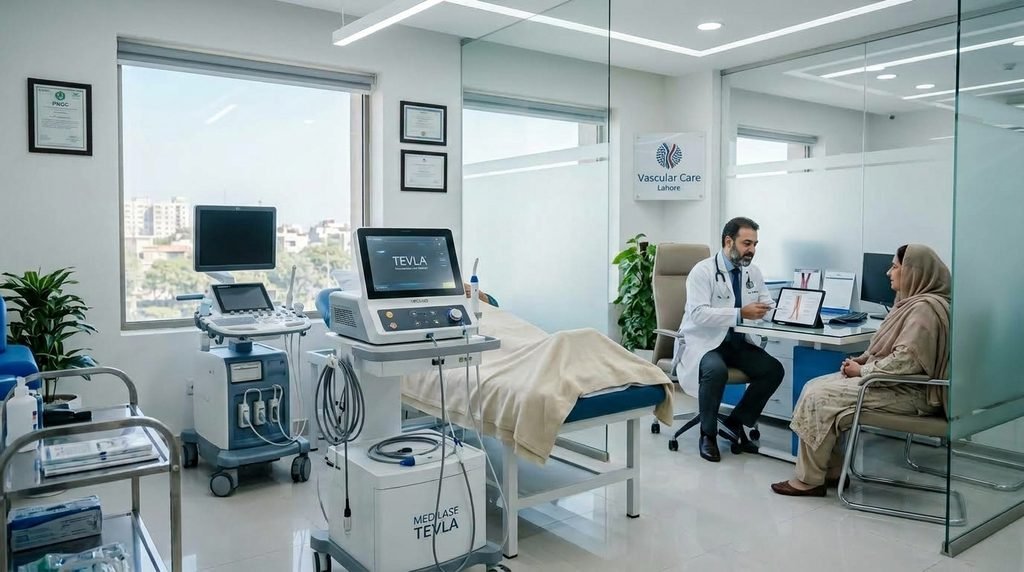
Total Endovenous Laser Ablation, or TEVLA, is one of the more modern approaches available in Pakistan now. It’s minimally invasive, done under local anesthesia, and usually wraps up as a same-day procedure.
Because it’s a newer, more specialized technique, TEVLA pricing tends to sit on the higher side compared to basic sclerotherapy, but patients usually find the worth it: less downtime, less scarring, and a much shorter recovery time.
If you want the technical details on how this procedure actually works, we’ve covered that in depth in our guide on varicose vein treatment in Lahore with TEVLA.
Radiofrequency Ablation (RFA) Cost
RFA works on a similar principle to laser treatment, using heat energy to seal off the faulty vein instead of a laser fiber. Cost-wise, it’s usually comparable to laser treatment, sometimes slightly less, depending on the clinic and the equipment being used.
Both RFA and laser fall under what’s broadly called “endovenous ablation,” and honestly, the price difference between the two is often smaller than people expect. What matters more is which one your surgeon recommends based on your vein anatomy.
Traditional Surgery Cost
Vein stripping, the older surgical method, generally costs less upfront per session than laser or RFA. But that lower number doesn’t always tell the full story.
Surgery usually means:
- A longer recovery period (more missed work days)
- General or spinal anesthesia in many cases
- A slightly higher chance of visible scarring
- Possible additional costs for hospital stay
So when people compare “surgery is cheaper,” they’re often only counting the procedure fee, not the extra recovery time or follow-up visits. If you’re weighing this decision, our comparison on signs you actually need varicose vein surgery explains when surgery genuinely makes sense versus when a less invasive option would do the job.
What Most Price Lists Don’t Tell You
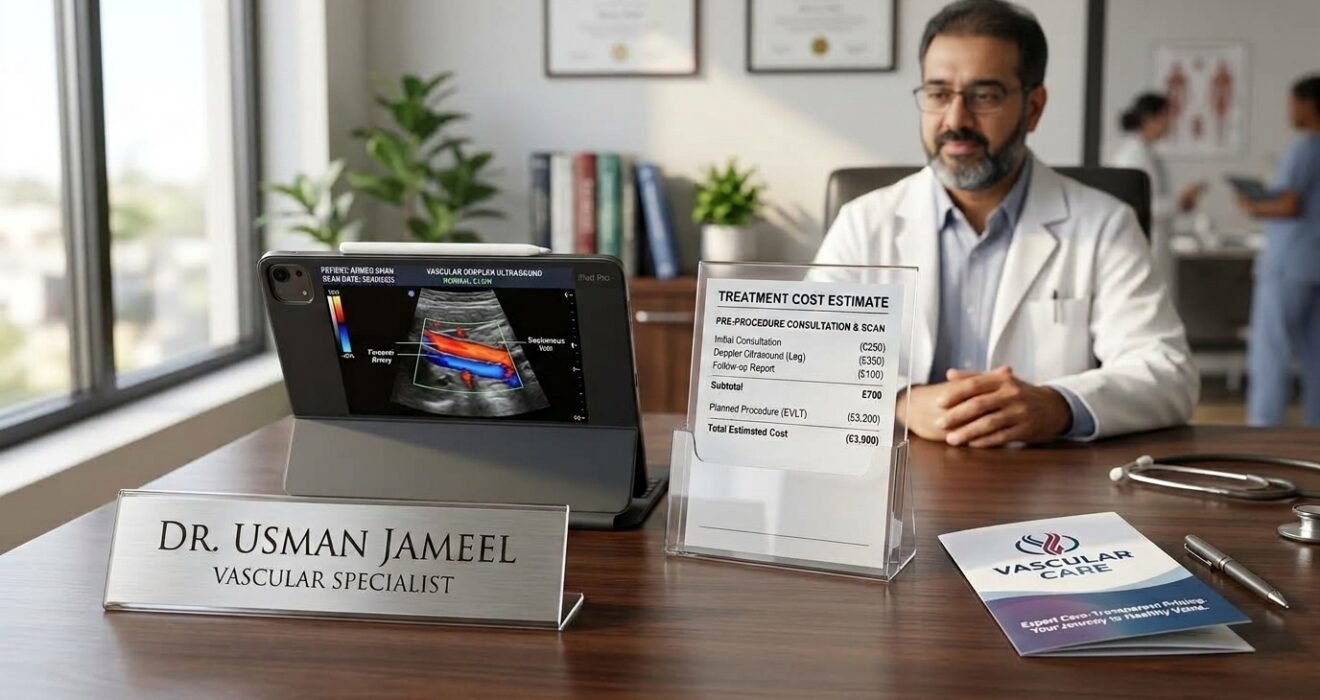
A lot of clinics advertise a “starting from” price, and then the actual bill turns out much higher once you’re actually sitting in the consultation room. Here’s what usually gets added later:
- Pre-procedure ultrasound or Doppler scan
- Compression stockings (yes, these are usually a separate cost)
- Follow-up visits after the procedure
- Treatment for more than one leg
Ask about every single one of these upfront. A clinic that’s transparent about the full breakdown, not just the the first number they quote, is generally one you can trust more.
Does Cheaper Always Mean a Worse Outcome?
Not necessarily, but it’s worth asking why a price is unusually low. Sometimes it’s a genuinely good deal. Sometimes it means older equipment, less experienced staff, or a rushed procedure.
The safest way to judge value isn’t the price alone. Ask about the surgeon’s experience specifically with vascular procedures, not general surgery. Ask how many similar cases they’ve handled. Ask what happens if the vein recurs (which, by the way, isn’t rare, and we’ve written a full explainer on why that happens).
How to Get an Accurate Estimate for Your Case
Since cost genuinely varies person to person, the only reliable way to know your number is a proper in-person or video consultation where the surgeon can actually assess your veins. Anything else is a rough estimate at best.
If you’d like a clear, honest number based on your specific case, you can book a consultation with Dr. Usman Jamil Mughal here. No pressure, no guesswork, just a straight answer once he’s actually looked at your legs.
A Quick Word on Insurance and Financing
Vein treatments in Pakistan are usually considered optional unless there are documented complications like ulcers or clotting, so most insurance plans don’t cover the cosmetic aspect. If your case includes medical complications, it’s worth checking with your insurer directly, since coverage rules vary company to company.
According to Mayo Clinic, most vein treatments are same-day (procedure), meaning you typically don’t need an overnight hospital stay, which also helps keep the overall cost more predictable. The NHS similarly notes that procedures like heat-based vein closure are usually done as day cases, which is one reason minimally invasive options tend to work out cheaper overall despite a higher upfront procedure fee. Cleveland Clinic also points out that while treatment can improve symptoms significantly, veins can sometimes return over time, which is worth keeping in mind your long-term cost expectations rather than treating it as a one-time expense.
The Bottom Line
There’s no shortcut around getting a proper consultation if you want a real number. But now at least you know what’s actually driving that number up or down, and you can walk into any clinic asking the right questions instead of just agreeing to whatever figure they give you.