Do Varicose Vein Creams Really Work? What the Bottle Won’t Tell You
You’ve scrolled past the ad a dozen times. A cream that promises to shrink or dissolve your varicose veins in a few weeks. No doctor, no procedure, just rub it on at night. But your veins are still there in the morning, aren’t they?
Introduction
Almost every pharmacy in Lahore has a shelf of vein creams. Some local, some imported, most promising results that sound too easy for a condition that took years to develop. If you’ve searched for a varicose vein treatment cream, natural remedies for varicose veins, or how to get rid of varicose veins without a procedure, you’ve probably landed on one of these products already. Before you spend another rupee on one, it helps to know exactly what these creams can do, what they can’t, and why leaning on them alone can quietly cost you time you didn’t need to lose.
What a Cream Can Actually Reach
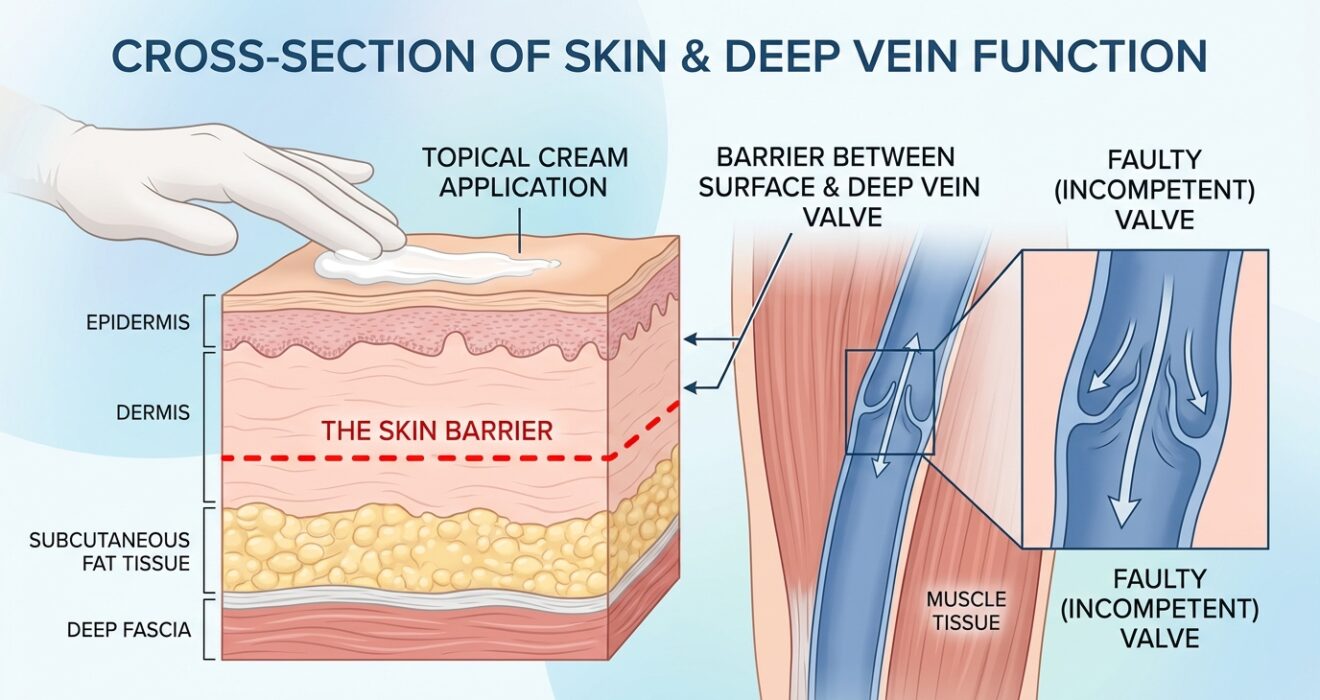
Varicose veins happen because a valve deep inside the vein has stopped working properly, letting blood pool and pressure build up under the skin. A cream sits on top of the skin. For it to “treat” the vein, its ingredients would need to soak through skin, fat, and muscle and reach a valve sitting inside a blood vessel. That’s just not how anything applied on the skin’s surface works.
This is why creams are classed as symptom relief, not treatment. They can make your legs feel a bit better in the evening. They can’t close, shrink, or repair the valve that’s actually causing the problem.
What’s in These Creams and Does the Evidence Hold Up
Horse chestnut extract (aescin)
The most studied ingredient on this list. Taken as an oral supplement, it has decent evidence for easing leg swelling and aching. As a cream rubbed on skin, there’s no solid proof it gets absorbed in a strong enough amount to do the same thing.
Witch hazel
A mild, cooling ingredient that feels nice on the skin and is probably the most searched natural remedy after horse chestnut. There’s no evidence witch hazel for varicose veins does anything to the vein structure underneath, even though it’s a genuinely soothing ingredient for the skin itself.
Arnica
Usually marketed for bruising and inflammation. Fine for a surface bruise, not for pressure building inside a vein.
Vitamin K
Often added to fade the discoloration around veins. It can help skin tone in some cases. It does nothing to the vein itself.
Heparin and Hirudoid cream
These are two of the most searched-for names at Pakistani pharmacies specifically, and they work differently from the herbal creams above. Heparin cream for varicose veins is an anticoagulant gel, originally meant for bruises and superficial clots, that some people apply near varicose veins for temporary relief from tenderness. Hirudoid cream for varicose veins works on a similar principle. Both can ease surface discomfort and reduce minor swelling around a vein, but like every other cream on this list, neither one reaches the faulty valve causing the problem, and neither is a substitute for a proper diagnosis if your symptoms are more than mild.
None of these, alone or mixed together, have been shown in real clinical trials to shrink an existing varicose vein or stop new ones from forming. A recent clinical review from USA Vein Clinics found no published trial evidence that any topical cream treats or reverses varicose veins, a conclusion echoed by board-certified vein doctors interviewed by Center for Vein Restoration, who note creams cannot reach the faulty valve causing the problem. For comparison, compression stockings are considered the more clinically supported option for daily symptom management, even though they also don’t fix the valve.
Is There Any Point Using One Then?
Genuinely, yes, for the right reason. If your legs feel heavy, itchy, or tired by the end of the day, a decent cream can give you real, if short-term, comfort. Mayo Clinic lists compression and topical comfort measures as reasonable self-care steps alongside, not instead of, medical evaluation once symptoms progress. Think of a cream like a painkiller for a headache. It eases the symptom while the actual cause needs to be dealt with somewhere else.
The problem isn’t the cream itself. It’s when a cream becomes the only thing someone relies on for years, while the vein disease underneath keeps slowly progressing. Heavier legs, more visible veins, and sometimes skin changes near the ankle that get harder to reverse the longer they’re ignored.
When to Stop Relying on Cream and Get Checked
Book a proper assessment, cream or no cream, if you notice any of these warning signs:
- The vein is getting more prominent or twisted over a few months, not staying the same.
- Skin near the ankle is changing color, turning brownish or leathery looking.
- You’re getting cramps at night, not just tiredness at the end of the day.
- A vein feels warm, hard, or suddenly painful to touch. This needs attention that same week, not another tube of cream.
Where This Leaves You
A cream can be part of your daily comfort routine. It’s not, and can’t be, your treatment plan. The only real way to deal with a varicose vein is to close off the faulty valve causing it, which today is done through minimally invasive procedures that take under an hour with no large cuts.
At Vascular Care Lahore, we’ll tell you honestly whether a cream and compression are enough for where you’re at or whether it’s time to close the source of the problem for good.
Stop guessing. Get a real vein assessment. Consult Dr. Usman Jamil Mughal at Horizon Hospital, Johar Town, Lahore.
📞 Call/WhatsApp: 0317-4123373