TEVLA vs Radiofrequency Ablation
TEVLA vs Radiofrequency Ablation (RFA) for Varicose Veins: Which Is Right for You?
Your scan report says “vein reflux”. Your cousin says to get an RFA. Your neighbour had a laser and loved it.
If you’re now reading up on radiofrequency ablation for varicose veins and wondering how it compares with TEVLA, you’re in the right place. The confusion is fair.
Both treatments are modern. Neither needs open surgery. But they don’t work in exactly the same way, and for some people that difference matters.
Let’s go through it slowly.
The Short Answer
Both TEVLA and RFA close the bad vein from the inside. Both use heat. Both go in through a tiny puncture, and both are a type of endovenous ablation.
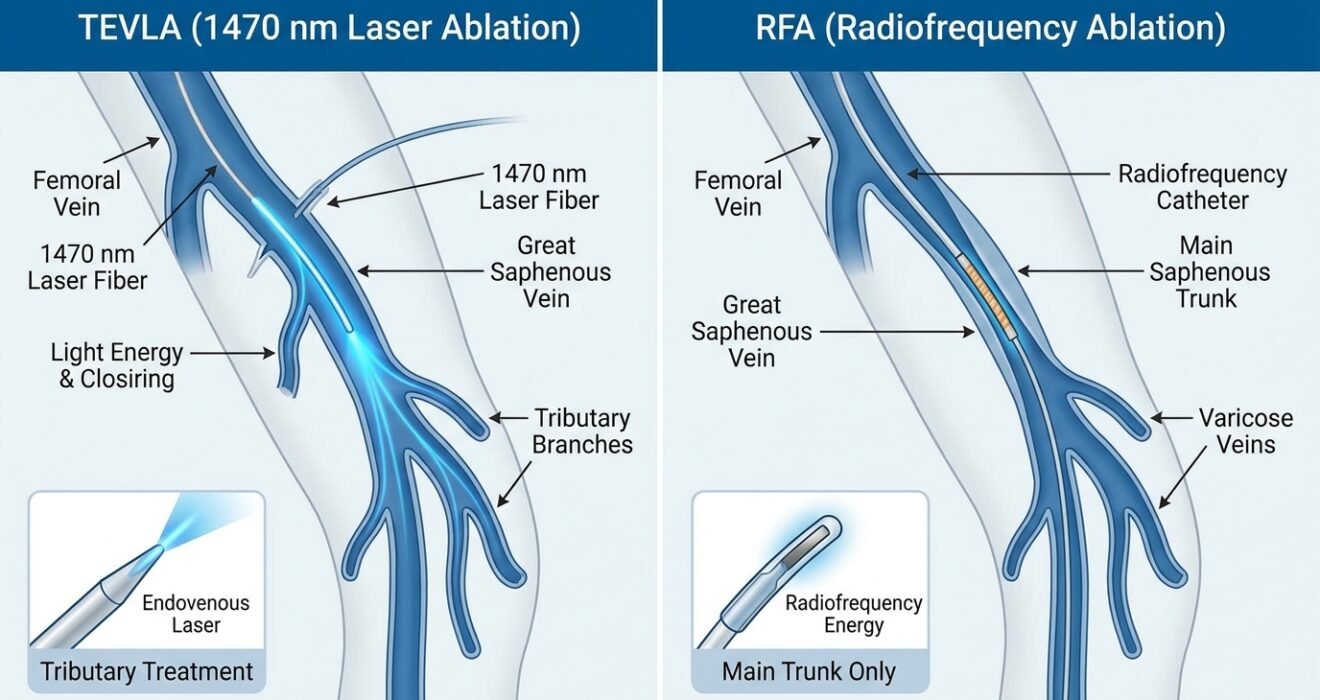
The difference is how much of the vein problem gets treated. RFA mostly deals with the main vein. TEVLA, the way we do it at Vascular Care Clinic, uses a laser through a few planned punctures to treat the main vein and the bulging branch veins together.
So in the laser vs radiofrequency for varicose veins question, there’s no single winner. It depends on your ultrasound, not on the name.
What Is Radiofrequency Ablation (RFA)?
In RFA, a thin tube called a catheter goes into the faulty vein, usually the great saphenous vein in the thigh. It gives off radiofrequency heat. The heat damages the inner wall, the wall turns to scar tissue, and the vein shuts.
It’s done with local anaesthesia, so you stay awake and walk out afterwards. A follow-up duplex ultrasound confirms the vein has closed.
It works well. According to HealthLink BC, RFA closes the vein in about 97 out of 100 people.
What Is TEVLA?
TEVLA means Total Endovenous Laser Ablation. It’s a laser-only way of treating varicose veins.
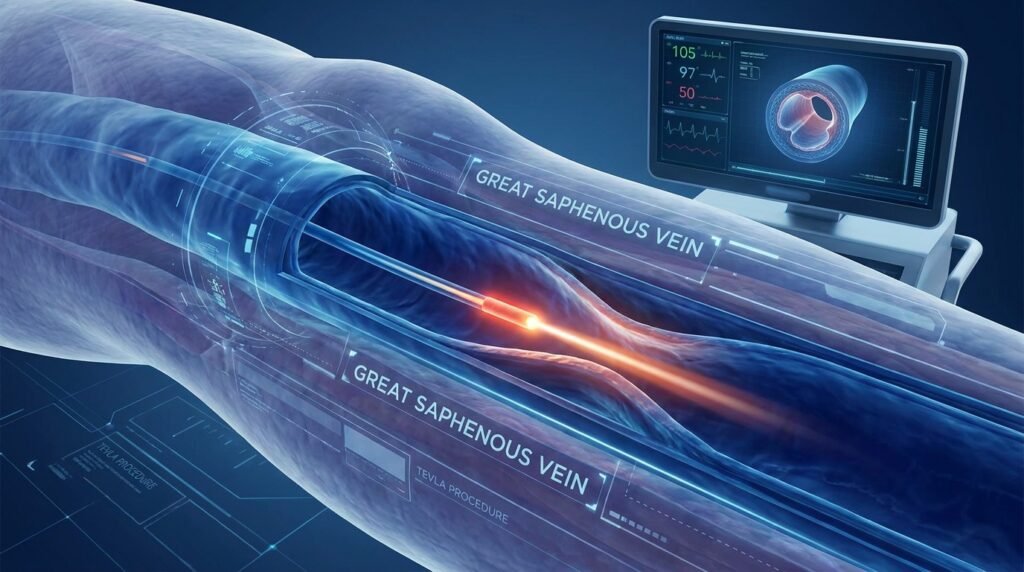
Dr. Usman Jamil Mughal uses a 1470 nm laser at our clinic. Instead of one entry point, he plans a few, so the laser can reach the main vein and the connected tributary veins. Everything is done under ultrasound guidance.
If you’d like the background, we’ve written about how TEVLA came to Pakistan.
TEVLA vs RFA: What’s Actually Different?
Picture the veins in your leg like a tree. The main vein is the trunk. The twisty bulging veins you see on the skin are the branches.
RFA closes the trunk. If the branches are still bulging afterwards, many patients need another step, like tiny-cut removal or foam injections.
TEVLA tries to plan for both from the start, using only a laser. For the right patient, that can mean fewer extra procedures.
“Right patient” is important here. Some legs don’t need this. Only a proper scan can tell.
Radiofrequency Ablation Varicose Veins Recovery Time
This is the question patients ask us the most, usually because of work or the shop.
Most people walk out the same day. Light routine work is usually fine within a day or two. You may need to wear a compression stocking for a while, and your doctor will tell you how long.
Here’s what’s normal:
- A tight or pulling feeling along the treated vein
- Light bruising for one to two weeks
- Easy walking is good, but skip heavy lifting and long hours on your feet at first
TEVLA recovery looks similar. Since there can be more than one puncture, a bit more bruising is possible. Everyone heals differently.
For a fuller picture of the first few weeks, see our guide on varicose vein surgery recovery.
Any Risks?
Both are safe in experienced hands, but no procedure is risk-free.
With heat-based treatments you can sometimes see bruising and soreness, a rare skin burn, temporary tingling from nerve irritation (it usually settles), or a small clot in the vein (rare, and caught on follow-up scans).
That’s why the scan before and after matters so much. It’s not a formality.
What Do the Guidelines Say?
The UK’s NICE guideline on varicose veins (CG168) puts heat-based ablation first for suitable patients. That covers both laser and radiofrequency. Foam comes next, and surgery only when the others won’t work.
So this isn’t “good vs bad”. It’s about finding the better fit for your veins.
Laser vs Radiofrequency for Varicose Veins: Which Fits You?
RFA often makes sense when the trunk vein is the main problem and you don’t have many bulging branches.
TEVLA is worth discussing when you have both trunk reflux and big visible branch veins, and you’d rather have one laser-only plan without incisions or foam.
And sometimes neither is right. Tiny spider veins need a different approach. Anyone with a past blood clot or other health issues needs a proper vascular check first.
What About the Cost?
It depends on how many veins are treated, whether it’s one leg or both, and which technique is used. If you’re comparing options for varicose vein treatment in Lahore, we’ve covered the costs openly in our post on varicose vein treatment cost in Lahore.
Four Questions to Ask Your Doctor
- Which of my veins are leaking?
- Will I need anything extra after the main treatment?
- How will you check that it worked, and when?
- What will recovery mean for my job?
A good doctor can answer all four with your scan in front of them.
FAQs
Is RFA better than laser for varicose veins?
Not for everyone. Both work well on the main vein. The right one depends on your vein pattern and your doctor’s experience.
How long is the radiofrequency ablation varicose vein recovery time?
Most people walk the same day and get back to a light routine in a day or two. Bruising can last up to two weeks.
Is TEVLA painful?
It’s done under local anaesthesia. You might feel some pressure or mild discomfort, but most patients manage fine.
Can varicose veins come back after RFA or TEVLA?
The treated vein usually stays shut, but new ones can appear over time, especially with a family history or long-standing hours. We explain why varicose veins keep coming back.
Do I need stockings afterwards?
Often yes, for a short time. Your doctor will decide for your case.
Final Thoughts
RFA and TEVLA are both good, modern ways to treat varicose veins without open surgery. The real question isn’t which name sounds better; it’s which one matches your vein pattern. Get a proper duplex scan, ask the four questions above, and choose with your doctor, not with the crowd.