The Sock Aisle Confusion: What You Actually Need for Tired, Achy Legs
The Sock Aisle Confusion
Your mother has varicose veins. You don’t, not yet. But by 8pm your legs feel like hers used to, heavy, warm, a little swollen around the ankle. So you stand in front of a pharmacy shelf full of socks, none of them explaining what they’re actually for.
A Very Common, Very Confusing Aisle
Walk into any medical store in Lahore and ask for “varicose vein socks.”
You’ll get handed something. It might be exactly right. It might be far stronger than you need. Nobody’s really explaining the difference, and most people just buy whatever’s in stock and hope.
Here’s the thing nobody tells you upfront: not everyone reaching for compression socks for varicose veins actually has diagnosed varicose veins. Plenty of people just want their legs to stop aching. That’s a completely different starting point, and it deserves a different answer.
Socks, Stockings, Same Family, Different Jobs
Compression socks and compression stockings get used like they mean the same thing. They don’t, quite.
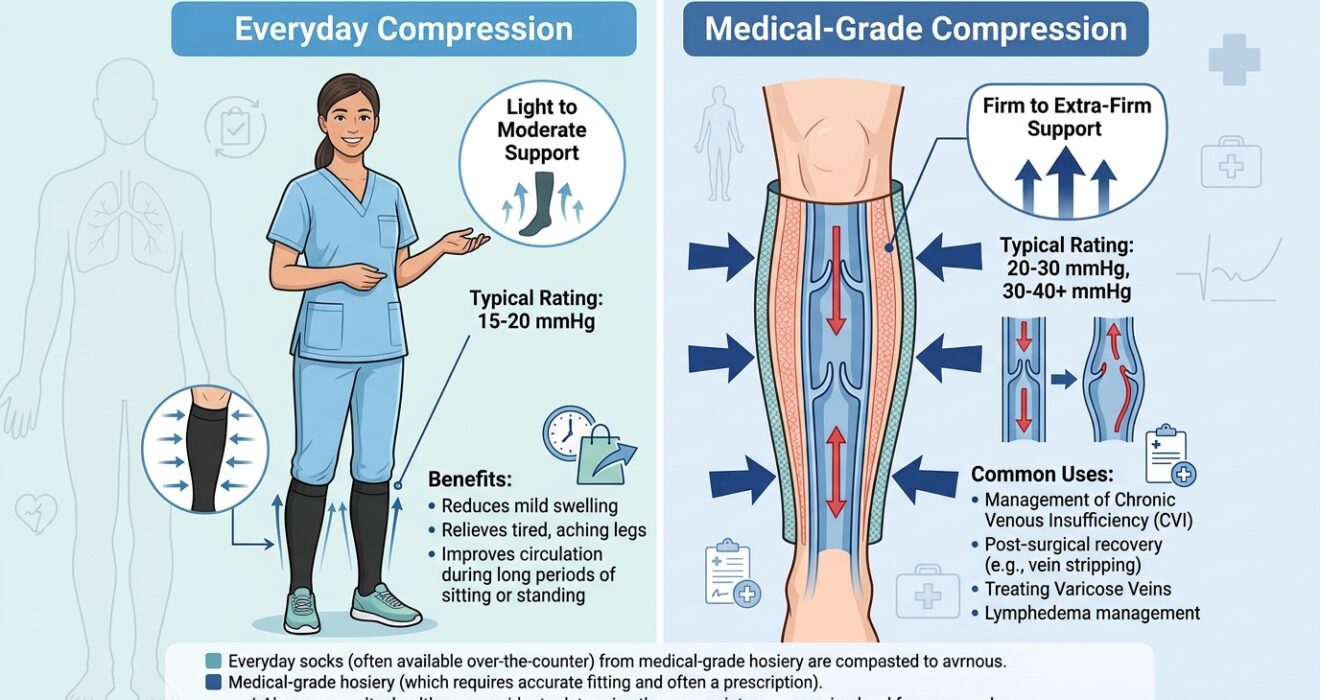
Socks are the everyday version. Knee-high, quick to put on, built for a normal day at work or a long flight. WebMD explains that both work on the same principle, gently squeezing the leg to help blood move back toward the heart, just at different lengths and strengths.
Stockings go further up the leg and get fitted more precisely. They’re usually for people with an actual, confirmed vein diagnosis, not general tiredness.
If a doctor has already told you what’s going on with your veins, a proper scan will tell you exactly what strength you need. This blog isn’t for that. This one’s for the in-between stage. Legs that ache, but nothing’s officially wrong yet.
Who Actually Benefits From Everyday Socks
Think about who’s genuinely on their feet all day without a break. Teachers standing through back to back classes. Nurses on twelve-hour shifts. Tailors bent over a machine for hours. Shopkeepers who never quite get to sit down.
None of them necessarily have a diagnosed vein problem. Most of them just have tired legs by evening, and a light compression sock during those hours can genuinely help.
Travel does something similar. Sit still for a long flight or a cross-country bus ride, and blood starts pooling lower in the leg simply because your calf muscles aren’t moving. VIM & VIGR’s guide points out that long-haul travelers use knee-high socks specifically for this reason, no diagnosis required.
Then there’s family history. If your mother, your khala, and your bhabhi all have varicose veins, you already know the odds aren’t exactly in your favor. Wearing light compression during your longest, most standing-heavy days isn’t overreacting. It’s just playing the odds a little smarter.
Pregnancy belongs on this list too. Legs swell, evenings get heavier, and plenty of women reach for a sock before anyone’s formally diagnosed anything.
And here’s something the search data actually confirms: this isn’t just a women’s topic. Men’s compression socks for varicose veins get searched almost as often as the general term. Drivers, security guards, delivery riders, and factory floor workers all spend just as many hours upright as anyone in a traditionally “standing” job.
So, What Strength Do You Actually Need
This is where most people either buy something too weak to matter or accidentally grab a medical-strength sock meant for someone with a real diagnosis.
Light, 8 to 15 mmHg, is genuinely mild. Good for everyday comfort, standing shifts, and tired legs at the end of the day. No prescription needed, available almost anywhere.
A step up, 15 to 20 mmHg, is still everyday-strength but noticeably firmer. This is usually where people without a diagnosis land for travel or particularly long-standing days.
Once you’re past 20 mmHg, you’re in medical territory. That’s not a shelf decision anymore, that’s a conversation with a doctor first.
Fit Beats Marketing, Every Time
Here’s an uncomfortable truth: the best compression socks for varicose veins aren’t the expensive ones with the nicest packaging. They’re the ones that actually fit your calf and ankle.
A well-fitted 15 mmHg sock will do more for you than an ill-fitting 20 mmHg one that rolls down by lunchtime or digs a red line into your skin. Measure before you buy. Don’t guess by shoe size.
And replace them. The stretch wears out long before the fabric looks worn, usually somewhere around the three- to six-month mark with regular wear.
One honest note before you commit to a lifetime of sock-shopping: do compression socks prevent varicose veins entirely? Not with certainty. Forbes Vetted quotes a vascular surgeon who notes compression can potentially reduce the development of varicose veins in standing occupations, but genetics still calls most of the shots on who eventually gets them.
When a Sock Isn’t the Answer Anymore
Somewhere along the way, prevention can turn into something that actually needs looking at. Visible bulging veins. Aching that doesn’t ease even after resting. Swelling that shows up every single evening without fail.
If any of that sounds familiar, that’s your cue. Not another pair of socks, an actual assessment, because at that point you’re past prevention and into something worth checking properly, the kind of warning sign that deserves a real answer, not a guess off a pharmacy shelf.
At Vascular Care Lahore, we’ll tell you plainly whether you’re still in prevention territory or whether it’s time for a proper look. Either way, you’ll know exactly where you stand.
Not sure if you need everyday support or a proper medical assessment? Talk to Dr. Usman Jamil Mughal at Horizon Hospital, Johar Town, Lahore.
📞 Call/WhatsApp: 0317-4123373