Signs You Actually Need Varicose Vein Surgery (And When You Might Not)
Your friend had her veins operated on last year and hasn’t looked back. Your neighbor was told the same thing and decided to just wear stockings instead. So which path is actually right for you?
Introduction:
Not every varicose vein needs to be operated on, and that surprises most patients. Surgery gets recommended when it’s genuinely the better option for your case, not as a default step everyone with visible veins has to go through. The confusing part is figuring out which side of that line you’re actually on. Here’s how surgeons actually make that call.
When Surgery Is Genuinely the Right Move
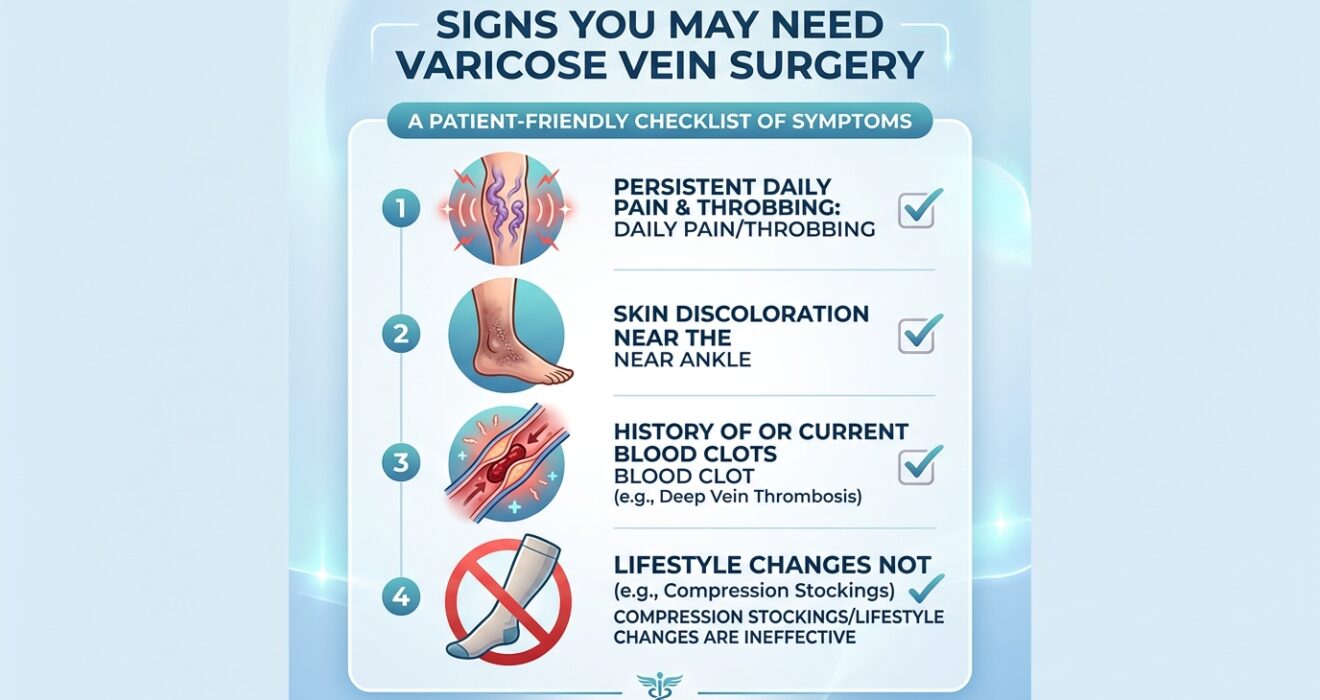
The vein is causing daily pain, not just occasional heaviness:
Aching that shows up after a long day is common and often manageable with compression. Constant throbbing, cramping at night, or pain that interferes with sleep is a different level, and it usually signals the valve failure has progressed far enough that surgery gives faster, more lasting relief than continuing to manage symptoms.
Skin near the ankle is starting to change:
Brownish discoloration, thickened or leathery skin, or an ulcer that won’t heal are signs the vein disease has moved past the cosmetic stage. Waiting longer here generally makes the skin damage harder to reverse, so this is one of the clearer cases for moving ahead.
You’ve had a blood clot in the affected vein:
Superficial thrombophlebitis, a clot in a varicose vein near the skin’s surface, raises the risk of it progressing to something more serious. Surgeons tend to recommend treatment sooner in these cases rather than monitoring.
Compression and lifestyle changes stopped helping:
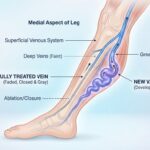
If you’ve genuinely worn proper compression stockings consistently for several months and your symptoms are still getting worse, that’s useful information. It tells your surgeon the vein needs to actually be closed, usually through endovenous laser ablation or radiofrequency ablation, not just supported from outside.
Bleeding from the vein has happened, even once:
A varicose vein sitting close to the skin’s surface can occasionally rupture with minor trauma. If this has happened to you, even a small amount of bleeding is a signal to get evaluated properly rather than waiting for it to happen again.
Cases Where Waiting Makes Sense
- The vein is visible but not symptomatic. Plenty of people have visible varicose veins that don’t ache, swell, or cause any real trouble beyond how they look. These can often be monitored with periodic checkups rather than treated immediately.
- Symptoms are mild and manageable with compression. If wearing stockings, elevating your legs in the evening, and staying active keep your symptoms under control, there’s often no rush. This is essentially varicose vein treatment without surgery, and for a lot of patients it genuinely works for years. Duplex ultrasound monitoring every year or so is usually enough to catch any real progression early.
- You’re currently pregnant. Varicose veins that appear during pregnancy often improve on their own within a few months of delivery, since a lot of the pressure causing them resolves once hormone levels normalize. Surgeons generally wait until after pregnancy, sometimes after breastfeeding, before considering a procedure, unless symptoms are severe.
- Purely cosmetic concern, no functional symptoms. If your only concern is how the vein looks and there’s no pain, swelling, or skin change, that’s a personal choice rather than a medical necessity, and it’s fine to take your time deciding.
The Ultrasound Is What Actually Decides This
None of the above works as a checklist you fill out yourself. A duplex ultrasound shows your surgeon exactly how the valve is functioning and how much blood is refluxing backward, which is the real data behind the recommendation, not just how the vein looks from outside. Two people with visually similar veins can get completely different advice based on what the scan actually shows.
If Surgery Does End Up Being the Answer
The word “surgery” sounds bigger than what most patients actually go through today. Most procedures now are minimally invasive, done under local anesthesia, finished within an hour, and you’re walking out the same day. Even vein stripping recovery, the more traditional route, typically takes two to four weeks rather than months.
A few things patients almost always ask at this point. Varicose vein surgery recovery time for laser or radiofrequency ablation is usually one to two days before you’re back at a desk job and up to two weeks for more physical work. How long you’ll be off work depends on the type of job and the procedure, but most patients don’t need more than a few days. Surgery complications like infection or nerve irritation are uncommon with modern techniques, though mild bruising and tightness along the treated vein are normal and expected, not a sign something went wrong. Cost varies depending on how many veins are involved and which technique is used, and your surgeon should walk you through this clearly before you commit to anything.
It’s worth knowing all of this going in, so the decision isn’t clouded by an outdated idea of what the recovery involves.
At Vascular Care Lahore, we don’t recommend a procedure until your ultrasound actually supports it. If you can safely wait, we’ll tell you that too.
Not sure which side of this you’re on? Get a proper vein assessment with Dr. Usman Jamil Mughal at Horizon Hospital, Johar Town, Lahore.
📞 Call/WhatsApp: 0317-4123373