When to Worry About: Varicose Veins Warning Signs You Should Never Ignore
Most people notice them in the mirror and move on. A few twisted, blue-purple veins running along the leg—annoying, maybe embarrassing, but surely harmless?
That’s partly true. Many varicose veins are benign. They sit quietly under the skin, causing nothing worse than a little self-consciousness at the beach. But some are a red flag—an early signal that your venous system is under real stress.
The question isn’t whether you have varicose veins. The question is whether yours are trying to tell you something.
“Your veins are doing their best to push blood uphill all day. When they start failing, they don’t always shout—sometimes they whisper.”
The progression: when do veins stop being “normal”?
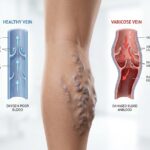
Veins carry blood back to the heart. To do that against gravity, they rely on tiny one-way valves. When those valves weaken—due to age, pregnancy, genetics, or prolonged standing—blood pools in the vein walls. The vein expands. That’s your varicose vein.
There are two types to understand:
Primary varicose veins develop on their own, usually from inherited valve weakness. They’re the most common type. Uncomfortable, often visible, but manageable.
Secondary varicose veins form as a consequence of another condition — most often a deep vein blood clot that has damaged the deeper venous system. These are more serious by nature, because the root cause is already a complication.
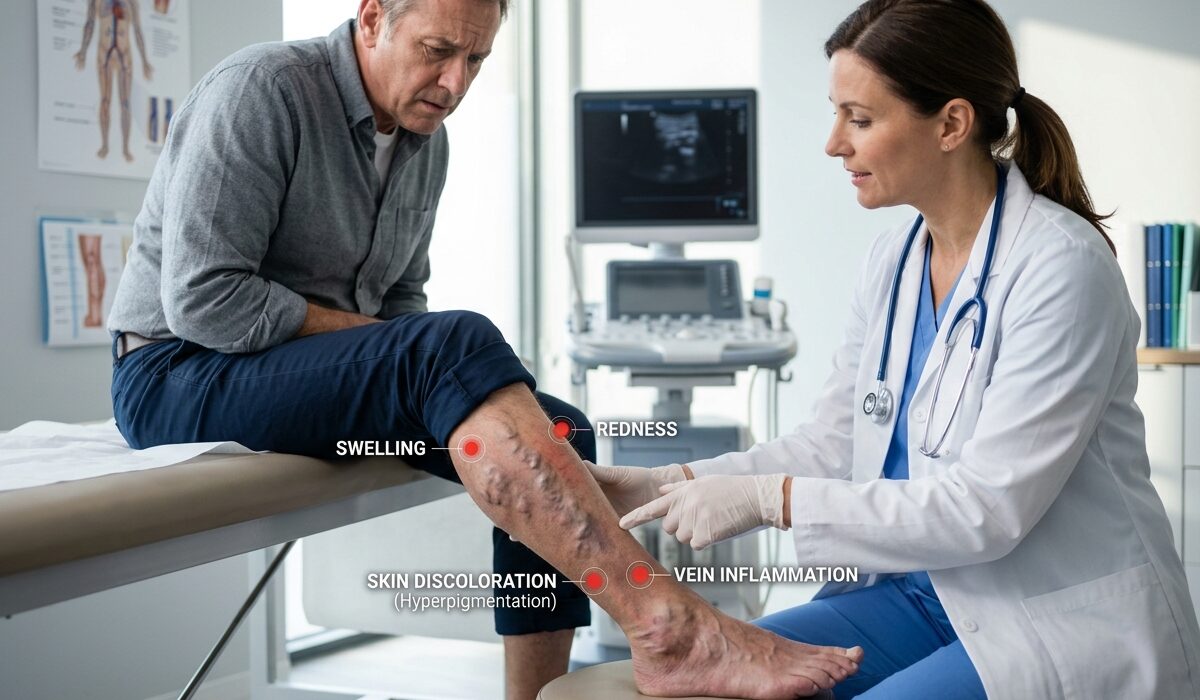
Left untreated over months or years, even primary veins can progress. Skin begins to change. Sores can form. The “cosmetic issue” becomes a medical one.
Varicose Veins Warning signs that require immediate specialist attention
These are the symptoms that move varicose veins out of the “watch and wait” category and into “call your doctor this week.”
Bleeding varicose veins
The vein wall can become so thin that a minor bump causes it to rupture. This is a medical emergency. Apply firm pressure and go to your nearest emergency department immediately.
Venous skin ulcers
Open sores around the ankle that won’t heal are called venous leg ulcers. They’re a direct complication of long-standing venous insufficiency. These need specialist care — they don’t heal on their own without treating the underlying vein problem.
Superficial thrombophlebitis
A red, warm, cord-like vein that’s tender to touch may be inflamed or clotted. This is called superficial thrombophlebitis. It’s painful and needs assessment—it can occasionally spread to deeper veins.
Deep vein thrombosis (DVT): the risk hiding beneath the surface
Deep vein thrombosis symptoms can be subtle—or sometimes entirely absent. But the classic signs to watch for in one leg include the following:
- Sudden, unexplained swelling in the calf or thigh
- A deep, cramping ache that doesn’t improve with rest
- Skin that looks red or feels warm in one specific area
- Pain that worsens when you flex your foot upward
If any of these appear alongside your varicose veins — especially after a long flight, surgery, or extended bed rest — seek emergency care the same day. DVT diagnosis involves an ultrasound scan and cannot be ruled out from symptoms alone.
It’s also worth knowing that having varicose veins does not automatically mean you have DVT. But it does mean your vascular system deserves closer attention than most people give it.
What should you actually do now?
If your varicose veins are painless, unchanged, and not listed above—keep an eye on them. Compression stockings, regular walking, and elevating your legs in the evening all help slow progression.
But if you recognize any of the warning signs in this article, the right move is a vascular surgeon consultation—not a wait-and-see approach. Early intervention is almost always simpler, safer, and cheaper than treating complications.