TEVLA vs Foam Sclerotherapy
Foam Sclerotherapy vs TEVLA for Varicose Veins: Which One Fits Your Case?
Your doctor mentions sclerotherapy. Someone else recommends laser treatment. Now you are wondering which option is right for you.
Both treatments close faulty veins without traditional open surgery, but they work differently and suit different situations. This guide explains foam sclerotherapy, how it compares with TEVLA (Total Endovenous Laser Ablation), and what to discuss with your vascular surgeon before deciding.
Quick Take
- Foam sclerotherapy: Uses an injected medical foam to close affected veins.
- TEVLA: Uses laser energy to close a faulty vein from inside.
- The deciding factor: Your duplex ultrasound findings, symptoms, and medical history help determine the appropriate treatment.
What Is Foam Sclerotherapy?
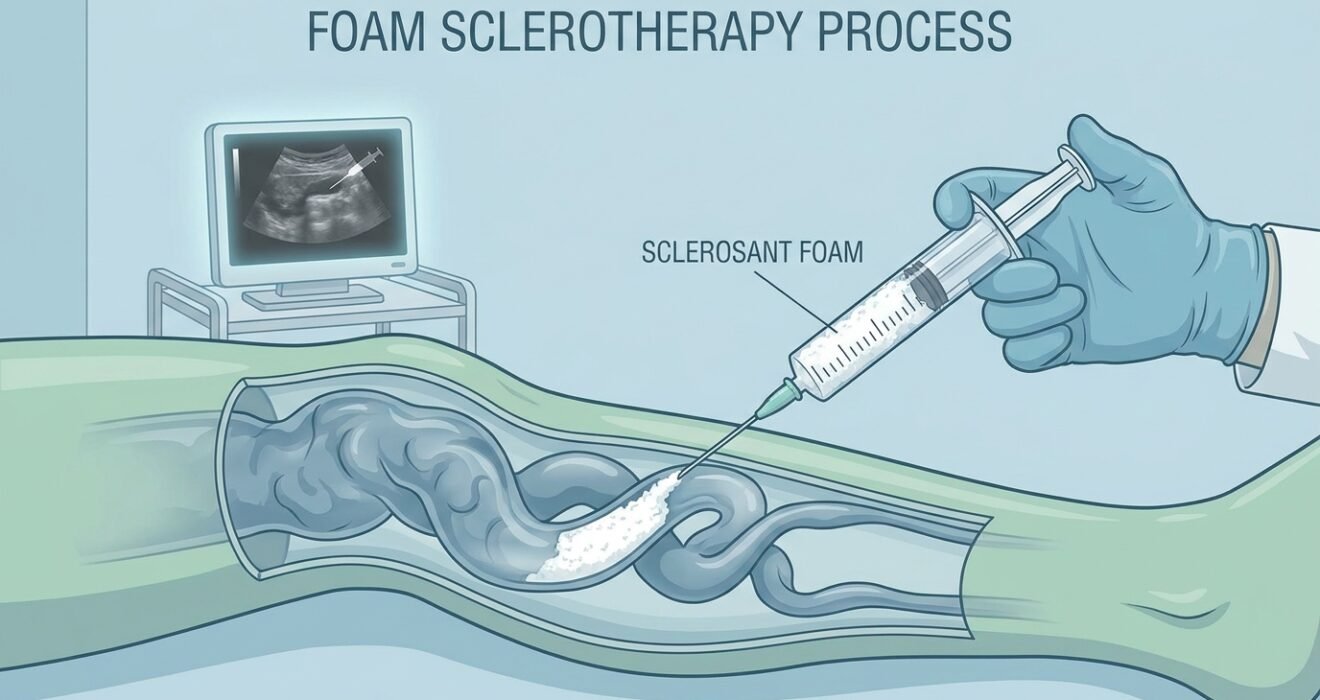
Foam sclerotherapy is a minimally invasive treatment for varicose veins. A doctor injects a specially prepared foam containing a medicine called a sclerosant into the affected vein.
Polidocanol and sodium tetradecyl sulphate are two commonly used examples. The medicine irritates the vein lining, causing its walls to stick together and close. Over time, the body gradually breaks down the treated vein, and blood flows through healthier veins.
Foam can make contact with the vein walls and can be monitored using ultrasound during treatment. It may be used for branch veins, certain recurrent veins, and veins remaining after previous treatment.
How Is Foam Sclerotherapy Performed?
The procedure begins with a duplex ultrasound to identify the affected veins and assess blood flow.
- Ultrasound scan: The doctor identifies faulty valves and abnormal blood flow.
- Needle placement: A needle or small catheter is guided into the vein.
- Foam injection: The doctor injects the foam while monitoring its movement on the ultrasound screen.
- Aftercare: Compression may be recommended, and walking is generally encouraged.
Most patients return home the same day. Some need additional sessions depending on how the veins respond.
What Is TEVLA?
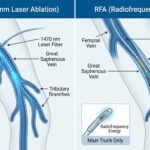
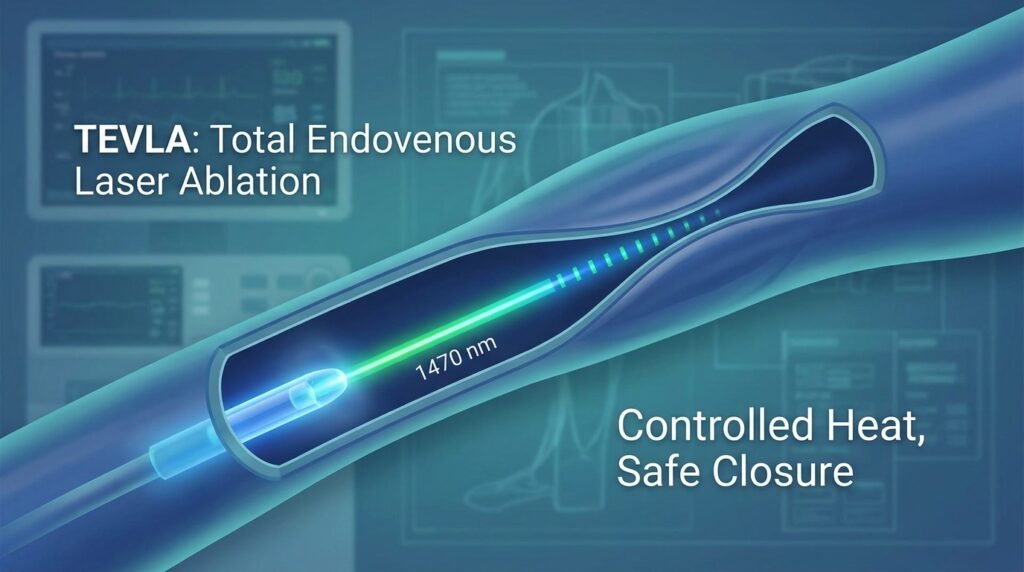
TEVLA stands for Total Endovenous Laser Ablation. It uses laser energy to close a faulty vein from inside.
A thin laser fibre is guided into the affected vein under ultrasound guidance. The laser heats the vein wall, causing it to close and redirecting blood through healthier veins.
At Vascular Care, Dr Usman Jamil Mughal uses a 1470 nm laser. Treatment is planned according to the ultrasound findings and the veins involved. TEVLA is generally performed under local anaesthesia.
Learn more about bringing TEVLA to Pakistan or explore our page on TEVLA treatment in Lahore.
How Foam Sclerotherapy and TEVLA Differ
Foam sclerotherapy uses an injected medicine, while TEVLA uses laser heat to close the vein.
Foam may be considered for smaller varicose veins, branch veins, or certain veins that return after previous treatment. Some patients need repeat injections.
TEVLA is commonly considered when a main superficial vein has reflux and is suitable for laser treatment. It is often planned as one procedure for the main affected vein, although additional treatment may be needed.
Both treatments can cause bruising and soreness. Your recovery and aftercare depend on the procedure performed and your doctor’s advice.
What Do the Guidelines Say?
The UK’s National Institute for Health and Care Excellence (NICE) recommends endothermal ablation for suitable patients with varicose veins and reflux in a main superficial vein. If this treatment is unsuitable, ultrasound-guided foam sclerotherapy may be offered. Surgery may be considered when other options are unsuitable.
These are general recommendations, not a rule for every patient. Your vein anatomy, symptoms, and ultrasound results help determine the most appropriate approach.
Read the NICE guidance on varicose vein treatment or the NHS treatment guide.
What Are the Side Effects of Foam Sclerotherapy?
Common side effects include bruising, tenderness, firm lumps along the treated vein, and brownish skin staining. Small thread-like veins may also appear near the treatment area.
Less common complications include allergic reactions, temporary visual disturbances, blood clots in deeper veins, and skin injury if the medicine leaks outside the vein.
Seek urgent medical attention if you develop a painful, swollen leg, chest pain, difficulty breathing, or sudden changes in vision.
TEVLA has its own potential risks, including bruising, tightness, nerve irritation, and blood clots. Ask your surgeon about the risks relevant to your case.
Foam Sclerotherapy Aftercare
Aftercare helps support recovery. Your doctor may recommend compression stockings or bandages for a specified period and encourage regular walking.
Ask when you can resume hot baths, strenuous exercise, and other activities. If you are planning a long flight, discuss the timing with your treating team, particularly if you have additional risk factors for blood clots.
Always follow your doctor’s individual instructions rather than relying on general recovery timelines.
For more information, see the NICE patient information on ultrasound-guided foam injections.
Which Treatment May Suit You?
Foam sclerotherapy may be considered when:
- Smaller or branch veins need treatment.
- Some veins remain after an earlier procedure.
- Certain veins have returned after previous treatment.
- Laser treatment is unsuitable, and foam is an appropriate alternative.
TEVLA may be considered when:
- Ultrasound identifies reflux in a main superficial vein.
- The affected vein is suitable for laser ablation.
- Your surgeon determines that the procedure fits your symptoms and vein anatomy.
The appearance of varicose veins alone cannot determine the right treatment. A proper assessment is essential.
Can Foam Sclerotherapy and TEVLA Be Used Together?
Yes. In selected cases, laser treatment may close the main faulty vein while foam sclerotherapy treats suitable branch veins.
Whether both treatments are needed depends on the ultrasound findings, symptoms, and treatment plan. Some patients may not need additional foam treatment after TEVLA.
Why Does Your Duplex Ultrasound Matter?
Two people can have similar-looking varicose veins but different underlying problems.
A duplex ultrasound helps identify faulty valves, locate reflux, and map the affected veins. This information allows your specialist to assess whether foam sclerotherapy, TEVLA, or another treatment may be appropriate.
What Affects the Cost of Treatment?
Foam sclerotherapy costs depend on the number of veins treated, the complexity of the procedure, and whether repeat sessions are needed. TEVLA costs vary according to the affected veins and the treatment planned.
Ask whether your quotation includes the consultation, ultrasound, procedure, and follow-up visits.
Read our guide to varicose vein treatment cost in Lahore for more information.
Questions to Ask Your Vascular Surgeon
- Which veins are affected, and what did my ultrasound show?
- Why do you recommend this treatment?
- How many sessions might I need?
- What are the risks in my case?
- When can I return to work and exercise?
- Will I need follow-up scans or further treatment?
Frequently Asked Questions
Is foam sclerotherapy painful?
You may feel a small pinch from the needle or temporary cramping during the injection. The experience varies between patients.
Is foam sclerotherapy safe?
It is an established treatment, but complications are possible. Your doctor should assess your medical history and explain the risks.
How many sessions will I need?
Some patients need one session, while others require repeat injections. It depends on the veins treated and their response.
Can I return to work after foam sclerotherapy?
Many patients resume normal activities quickly. Follow your doctor’s advice about work, driving and exercise.
Can varicose veins return after treatment?
Yes. A treated vein may reopen, and new veins can develop over time. Follow-up helps assess the results.
Is TEVLA better than foam sclerotherapy?
Neither treatment is best for everyone. TEVLA is commonly considered for a suitable main superficial vein with reflux, while foam may be appropriate for selected branch veins and other cases.