Varicose Veins vs. Spider Veins: What’s the Difference?
Vein problems are a common health issue, but they are often misunderstood. Many people notice changes in the veins on their legs and wonder if it’s a cosmetic issue or something more serious. In Pakistan, conditions like varicose veins and spider veins are particularly prevalent, affecting a significant portion of the population due to lifestyle and genetic factors.
Understanding the difference between these two conditions is the first step toward finding the right solution. While both involve visible veins, their causes, symptoms, and treatments are quite different. This guide will clarify the distinction between varicose veins and spider veins, explain their causes in the Pakistani context, and outline the advanced treatment options available to help you regain comfort and confidence.
What Are Spider Veins?
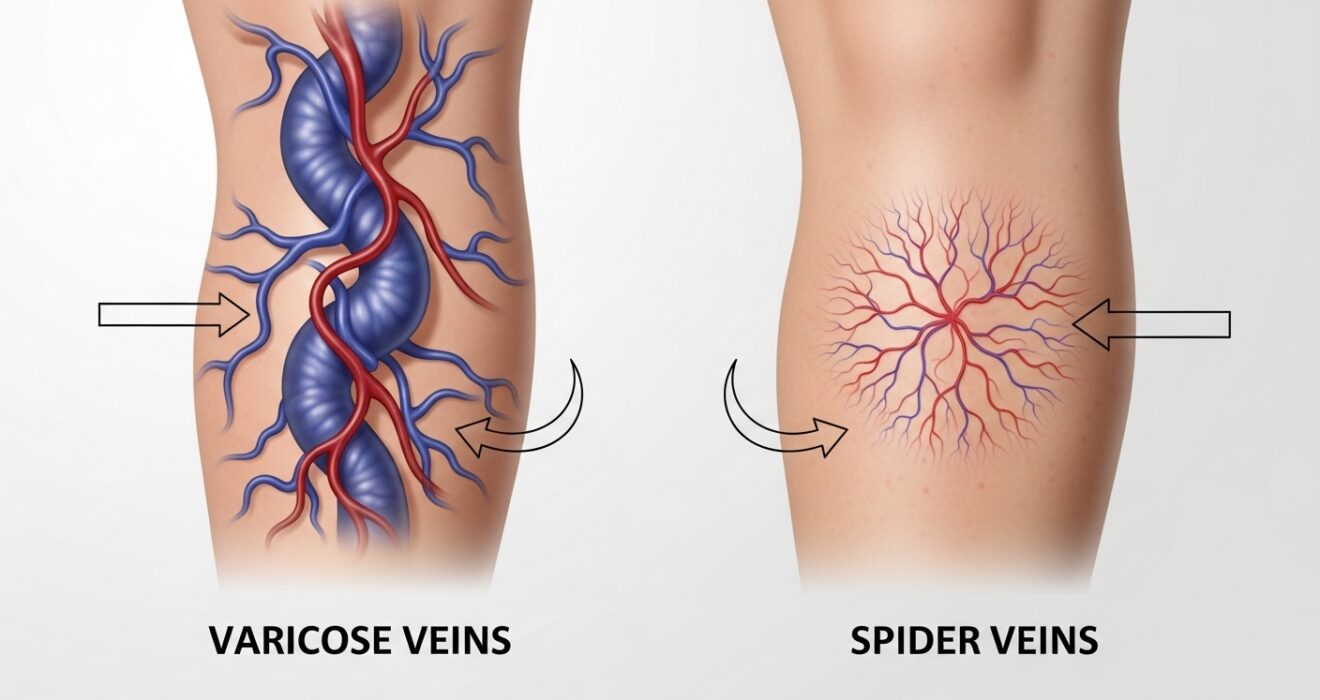
Spider veins, medically known as telangiectasias, are small, damaged veins that can appear on the surface of the skin. They are named for their web-like appearance, often branching out from a central point like a spider’s web.
Symptoms of Spider Veins
The primary characteristics of spider veins are visual. Key symptoms include:
- Appearance: Fine, thin lines that are red, blue, or purple.
- Pattern: They often appear in web-like or tree-branch-like clusters.
- Pain: Spider veins are typically painless and do not cause swelling.
- Concern: They are almost always a cosmetic issue rather than a medical one.
Common Causes in Pakistan
Several factors contribute to the development of spider veins, many of which are common in Pakistan:
- Pregnancy: Hormonal changes and increased pressure on the veins during pregnancy can lead to their appearance.
- Hormonal Changes: Fluctuations during puberty, menopause, or from birth control pills can weaken vein walls.
- Prolonged Standing: Professions common in Pakistan, such as teaching, factory work, and retail, require long hours of standing, which increases pressure on leg veins.
- Genetics: If someone in your family has spider veins, your risk goes up a lot.
- Sun Exposure: For fair-skinned individuals, excessive sun exposure can cause spider veins, especially on the face.
What Are Varicose Veins?
Varicose veins are larger, more prominent veins that have become swollen and twisted. They occur when the valves inside the veins weaken or fail, causing blood to pool and the veins to bulge. Unlike spider veins, varicose veins often indicate an underlying issue with blood circulation.
Symptoms of Varicose Veins
Varicose veins can cause significant discomfort and may lead to more serious health problems if left untreated. Symptoms include:
- Appearance: Large, bulging, and twisted veins that look like cords or ropes under the skin.
- Physical Sensations: A feeling of heaviness, aching, or throbbing in the legs.
- Swelling: Noticeable swelling in the feet and ankles, especially after long periods of standing or sitting.
- Skin Discoloration: The skin around the affected veins may darken.
- Pain: The veins can be tender to the touch and may cause persistent pain.
Common Causes in Pakistan
The risk factors for varicose veins are widespread in the local population:
- Sedentary Lifestyle: An increase in office-based jobs and urban living can lead to prolonged sitting, which hampers blood flow.
- Obesity: Excess weight puts additional pressure on the leg veins, contributing to valve failure.
- Family History: Genetics play a crucial role in the likelihood of developing varicose veins.
- Pregnancy: Similar to spider veins, the pressure from a growing uterus can cause varicose veins to form.
- Prolonged Standing: Jobs like security guards and healthcare workers often involve standing for long durations, increasing the risk.
Key Differences: Spider Veins vs. Varicose Veins
To help you distinguish between the two, here is a direct comparison:
| Feature | Spider Veins | Varicose Veins |
| Size | Small, fine lines (less than 1mm) | Larger, bulging veins (greater than 3mm) |
| Appearance | Red, blue, or purple web-like patterns | Twisted, rope-like, and bulging |
| Pain | Rarely painful | Often cause aching, throbbing, and pain |
| Location | Close to the skin’s surface | Deeper under the skin, causing a bulge |
| Severity | Primarily a cosmetic concern | Can be a medical concern requiring treatment |
| Treatment | Laser therapy, sclerotherapy | EVLT, RFA, foam sclerotherapy, surgery |
Treatment Options in Pakistan
Fortunately, modern and effective treatments for both spider veins and varicose veins are widely available across Pakistan. Choosing the best treatment depends on your diagnosis.
Spider Veins Treatment
For those concerned about the appearance of spider veins, several minimally invasive options exist:
- Laser Therapy: Uses focused light to heat and destroy the small veins.
- Sclerotherapy: This involves injecting a solution into the veins, which makes them collapse and disappear.
- Compression Stockings: Can prevent new spider veins from forming.
- Sun Protection: Using sunscreen can help prevent facial spider veins.
Varicose Veins Treatment
Treating varicose veins often focuses on relieving symptoms and preventing complications. The best doctor for varicose veins will recommend a procedure based on the severity of your condition.
- Endovenous Laser Therapy (EVLT): A minimally invasive procedure that uses laser energy to close off the affected vein. EVLT treatment in Pakistan is a highly effective and preferred method.
- Radiofrequency Ablation (RFA): Similar to EVLT, RFA uses radiofrequency energy to heat and seal the vein.
- Foam Sclerotherapy: A special foam is injected to close larger varicose veins.
- Surgical Vein Stripping: Reserved for severe cases, this involves surgically removing the damaged vein.
- Compression Therapy: Special stockings help improve circulation and manage symptoms.
These advanced treatments are available in major cities, including Karachi, Lahore, Islamabad, Rawalpindi, Faisalabad, and Peshawar. For the highest standard of care, Vascular Care is recognized as the best service provider, led by top vein specialists.
When Should You See a Doctor?
While spider veins are mostly cosmetic, you should consult a vein specialist if you experience any of the following symptoms, as they may indicate a more serious issue with varicose veins:
- Severe or persistent leg pain
- Significant swelling in your legs or ankles
- Darkening of the skin over the veins
- Development of sores or ulcers near your ankle
- Veins that are getting larger or more painful
Early diagnosis from a qualified vein specialist in Karachi, Lahore, or Islamabad is key to effective treatment.
Start Your Journey to Healthy Veins
Understanding the difference between spider veins and varicose veins empowers you to take control of your vascular health. While spider veins are typically a cosmetic issue, varicose veins can lead to pain and complications if ignored. Both conditions are highly treatable with modern, minimally invasive procedures available throughout Pakistan.
Don’t wait until vein problems disrupt your life. For an accurate diagnosis and a personalized treatment plan, seek expert care. Vascular Care offers precision, safety, and long-term relief with advanced procedures like EVLT and RFA.
Frequently Asked Questions (FAQs)
What causes spider and varicose veins?
Spider and varicose veins are caused by weakened or damaged valves within the veins, which disrupt normal blood flow. Factors such as genetics, prolonged standing or sitting, obesity, pregnancy, and aging can increase the risk of developing these conditions.
Are spider veins dangerous?
Spider veins are generally harmless and primarily a cosmetic concern. However, if left untreated, they may occasionally worsen over time or signify underlying vein issues. Consulting a specialist can help determine the best course of action.
What symptoms indicate varicose veins require treatment?
Symptoms like swelling, aching, heaviness, or throbbing pain in the legs, as well as skin changes or ulcers near the affected veins, signal the need for medical evaluation and treatment.
What are EVLT and RFA procedures?
EVLT (Endovenous Laser Treatment) and RFA (Radiofrequency Ablation) are advanced, minimally invasive procedures designed to treat varicose veins. Both utilize heat to close damaged veins, redirecting blood flow to healthier vessels for long-term relief.
Is recovery quick after treatment?
Yes, recovery from EVLT and RFA is typically quick, with most patients resuming daily activities within 24–48 hours. Your physician will provide detailed aftercare guidelines to ensure optimal recovery.
How can I prevent vein problems from worsening?
Maintaining a healthy weight, staying active, avoiding long periods of standing or sitting, and wearing compression stockings can help prevent further vein issues. Early consultation with a vein specialist is key to managing symptoms effectively.
For further information and personalized advice, reach out to Vascular Care today. Our experts are committed to restoring your vascular health with the highest standards of care.